
HOUSTON – The Houston City Council passed a $7.5 billion budget Wednesday, 15-1, adopting Mayor John Whitmire’s spending plan for the upcoming fiscal year after weeks of debate over new fees, spending priorities and the city’s long-term financial outlook.
The budget, which takes effect July 1, includes a new $5 monthly solid waste administrative fee and a right-of-way charge on Houston Water and Wastewater operations. Supporters say the measures help close budget gaps and maintain city services, while opponents contend the plan lacks transparency and fails to address deeper financial concerns.
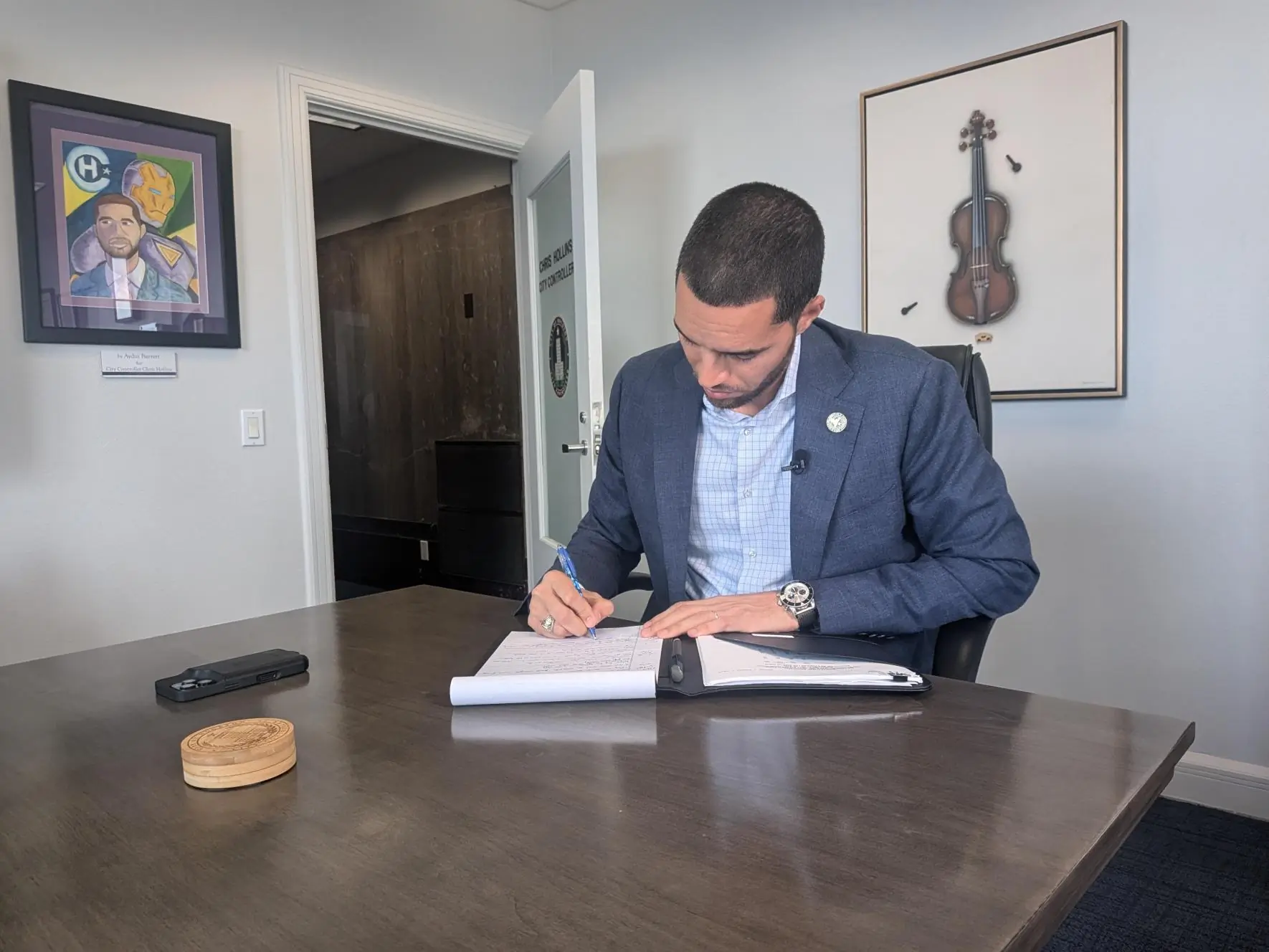
Among the most vocal critics was Controller Chris Hollins, who sharply condemned both the budget and the council’s decision to approve it.
“I’m genuinely disappointed in both what’s in this budget, the lack of transparency, the lack of honesty, and city council’s willingness to take the city further down this path of financial mismanagement,” Hollins said to KPRC 2 News.
Hollins argued the budget relies on accounting maneuvers rather than sustainable financial reforms.
“There’s so many gimmicks in here, so many hidden costs, and so much dishonesty about the burden that’s going to be placed on regular Houstonians,” he said.
The controller gave the spending plan a failing grade.
“If I were grading this budget, this budget would get an F. On transparency, on accountability, and on the financial ground that it’s putting the city on, but we move forward,” Hollins said.
A major point of contention remains the new trash fee, which city leaders say is necessary as solid waste operations transition toward a utility model. Hollins argued the charge unfairly impacts lower-income residents.
“But this $5 fee, which doesn’t even start to pay for the actual cost of trash, this $5 fee is going to be paid by poor people while we’re subsidizing rich people,” Hollins said. “This $5 is going cost the average Houstonian three times more than a basic property tax increase that would have raised the same amount of money.”
While several council members ultimately voted in favor of the budget, some expressed reservations, particularly regarding the new solid waste fee.
Council member Amy Peck supported the budget but made clear she has concerns about the city’s handling of trash collection services.
“I remain convinced that the city should seriously consider getting out of the trash business because for too long we have demonstrated an inability to consistently provide the level of service our residents deserve,” Peck said.
Still, Peck said she was willing to support the administration’s approach for now.
“I am willing to give the mayor’s new approach an opportunity because the status quo isn’t working, and I trust that the mayor will get this right,” she said. “But let me be clear about this. If residents are asked to pay more, they deserve better service in return.”
Peck also issued a warning that her support could be short-lived if services don’t improve.
“If I do not see a measurable, meaningful improvement in the performance of the new solid waste division, I will personally author a Prop A ordinance to repeal this fee,” she said.
Council Member Edward Pollard voted against the budget, arguing the city continues to spend more without delivering better results for residents.
“There’s no denying that we have a spending problem in the city of Houston,” Pollard said. “Over the last two fiscal years, our city has faced the largest budget deficits in the city’s history.”
Pollard questioned whether increased spending has translated into improved city services.
“Are we getting better streets? Are we more affordable housing? Are we less homelessness? Are we better trash collection? Stronger infrastructure? The answer is no,” he said.
Like Hollins, Pollard criticized the proposed trash fee, saying residents have not been given enough information about how the money will be used.
“Now this budget proposes to impact the solid waste department by adding a $5 admin fee. But at the moment, there are no real specifics on what that admin fee is actually going to do,” Pollard said. “What are we actually getting for the $5? Will we get on-time trash pickup? Because if we are going to get that, then I think people would be in favor of it. But that $5 is a patchwork job.”
Other council members voiced concerns but ultimately backed the budget. Council Member Alejandra Salinas expressed reservations about drawing funds from Houston Water but said she was willing to trust the administration’s assurances. Council Member Joe Panzarella emphasized that his support should not be viewed as unconditional.
“My yes vote is not a blanket support of this fund,” Panzarella said, adding that his vote came with expectations for accountability and results.
Council Member Sallie Alcorn defended the budget, describing it as a practical step toward improving city services.
“I see this budget as a positive step towards better service,” Alcorn said. “This budget is smart. It does provide a new revenue, in terms of a fee.”
The approved budget represents the culmination of weeks of hearings and debate over how Houston should address mounting fiscal pressures while maintaining public services. While city leaders say the plan puts Houston on firmer financial footing, critics warn the debate over fees, spending priorities, and long-term sustainability is far from over.

More Stories Like This In Our Email Newsletter

