

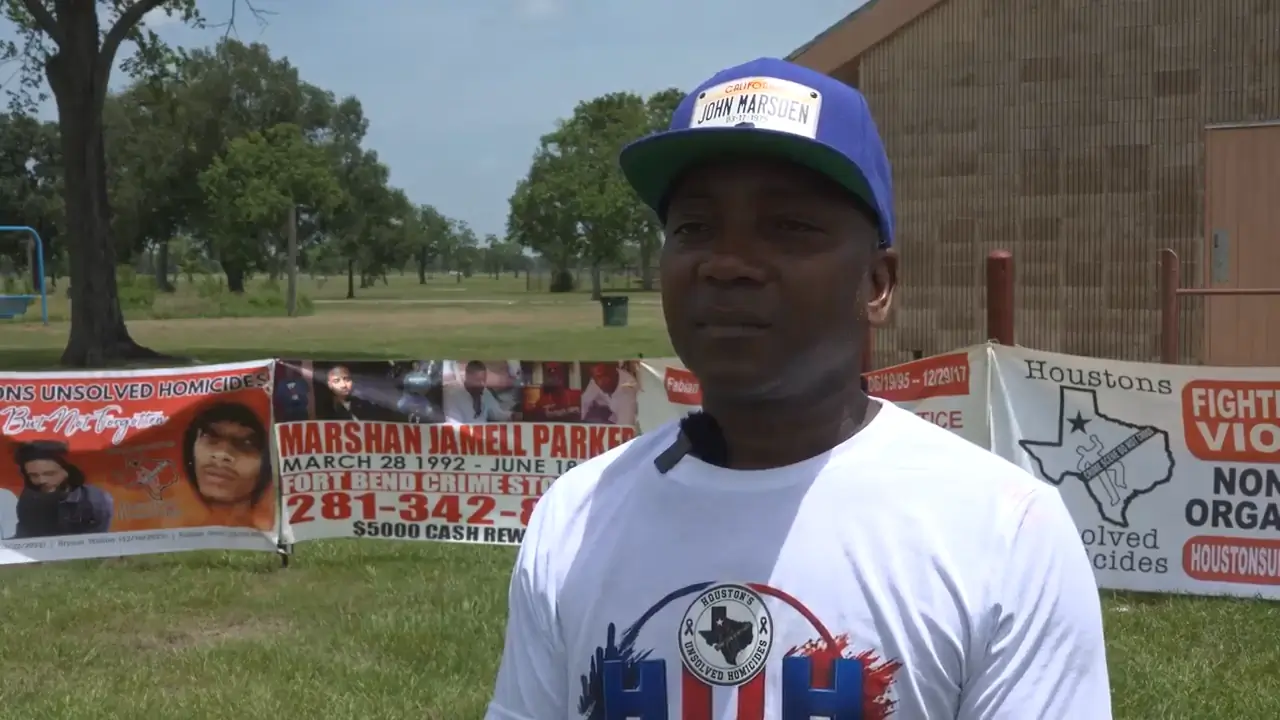
HOUSTON – On Saturday afternoon at Tom Bass Regional Park, families gathered for a potluck picnic—kids running between tables, adults trading stories, and portraits of lost loved ones watching from banners nearby. The event was one more reminder of what Houston’s Unsolved Homicides (H.U.H) has become: a place where people living with the same kind of unanswered pain can find each other, and where a private tragedy is turned outward into public purpose.
Founded in 2018, the Houston-based nonprofit began with John Marsden’s search for justice after the death of his son, Fabian O’Neal Smith, who was killed on Dec. 29, 2017, and whose case, the founder says, remains unsolved. What started as one family’s effort to keep a name from fading has evolved into an organization that blends advocacy, community outreach and simple, consistent presence for people who feel left behind by the passage of time.
Recommended Videos
Built in the space between loss and closure
For newsrooms, a violent death often arrives first as a breaking-news alert: a few confirmed details, a neighborhood, a time stamp, a name we work quickly to get right. But time moves differently for families. Long after the live shots and follow-ups end, the same questions remain—along with birthdays, empty seats at holidays, and a new normal built around absence.
KPRC 2 has reported on homicides across the Houston area for years, and many of the cases we write about do go unsolved. Houston’s Unsolved Homicides exists in that space after the headline—insisting these victims are not just case numbers or story links, but people still loved and still missed.
Marsden describes the group as a conduit: when information surfaces in a homicide case, he said H.U.H can pass it to law enforcement “to try to help clean up the crime in the streets.” That impulse—to keep working even when years have passed—is central to the organization’s identity.
But the nonprofit’s mission isn’t limited to the investigative side. Houston’s Unsolved Homicides says its purpose is to honor lives lost, uplift families, and strengthen communities through compassion, service, and unity—a framework that intentionally widens the focus beyond one case and into the daily realities families face after violence.
The organization’s work reflects that broader definition of justice: helping families feel less alone, and building community momentum around remembrance and support.
More than awareness: service as healing
H.U.H’s public presence often looks like community service—work Marsden calls his “therapy.” The group participates in local events and organizes outreach efforts that meet immediate needs, including distributing clothing and supplies and providing support to people experiencing homelessness. The nonprofit also highlights initiatives that extend beyond Houston, including donation shipments and partnerships abroad.
The organization frames that approach plainly: “healing begins with helping others.” That service-first mindset is part of how H.U.H keeps families connected even when the legal system moves slowly—or not at all.

And while the group’s annual picnic is designed for fellowship and remembrance, Marsden emphasizes the larger goal behind gatherings like it: creating a safe, recurring space where families can connect, share, and keep going.
The faces on the banners
At community events, H.U.H displays banners with victims’ names and photos—visual reminders of the cases that still weigh on families. Marsden pointed to several victims represented in the group’s materials and advocacy.
- Aaliyah Avila-Green
- Donta Mottley
- Jaime Vega
- Alonzo Irving
- Maria Jimenez Rodriguez
- Robert Cerda
- Carl Harrison
- Martin Lopez
- Donnie Gibbs
- Maliyah Rosalie Bass
- Marshan Jamell Parker
- Paul Jesus Martinez
- Fabian O’Neal Smith
These are not the only names that loved ones are missing.
Each name represents more than a cold case number; it represents a family’s before-and-after, and a life the group insists on continuing to speak aloud.

A gathering, and a message to the city
Organization leaders described their events as a space for “healing, fellowship, remembrance, and community support,” while also raising awareness about unsolved homicide cases across the Greater Houston area.
Dr. Zideco Siverand, the group’s vice president, said that “no family should have to carry their grief alone.” The statement captures what H.U.H tries to provide year-round: solidarity for families who often feel isolated—especially as headlines fade and attention shifts.
Houston’s Unsolved Homicides shares information about its mission, community events and ways to support its work at houstonsunsolvedhomicides.org.
If you have information on an unsolved homicide case:
- Contact HCSO Homicide Cold Case at (713) 274-9777.
- Contact the HPD Homicide Division at (713) 308-3600, or the HPD Cold Case Squad at (713) 308-3618

More Stories Like This In Our Email Newsletter