
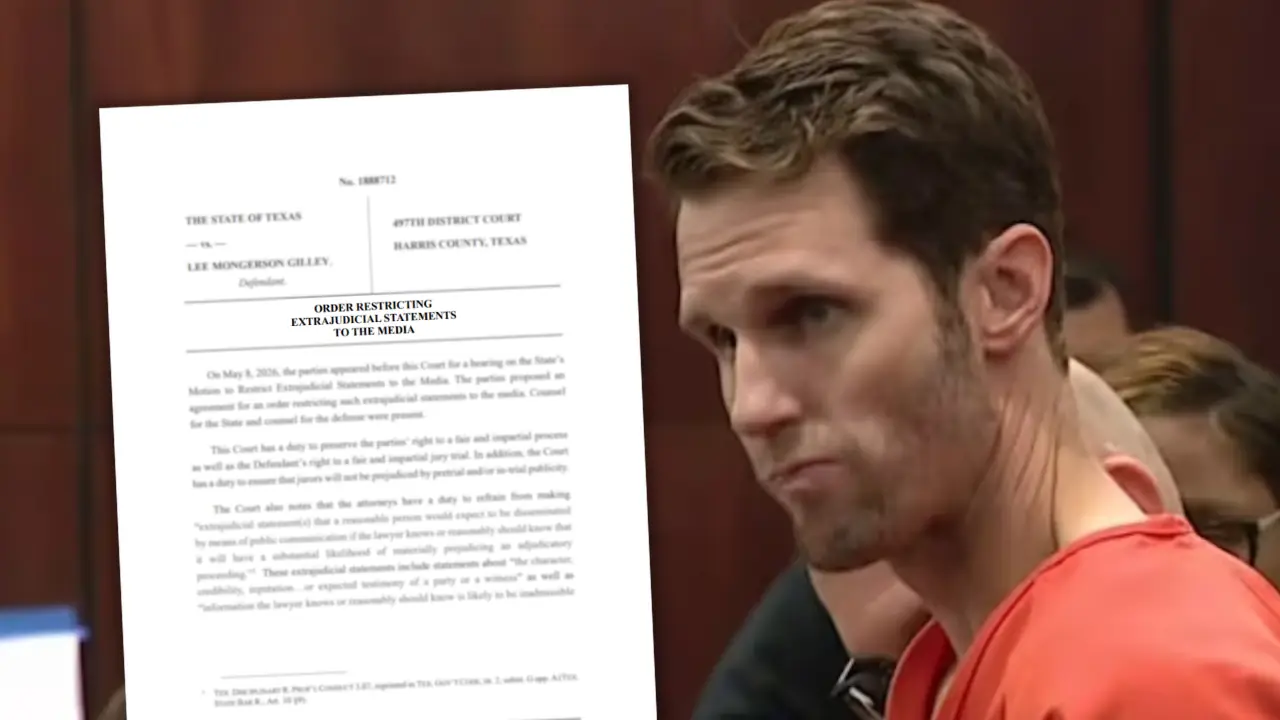
HOUSTON – A Harris County judge has issued a gag order that limits what attorneys and other case participants can say publicly in the capital murder case against Lee Gilley — the Houston man accused in the 2024 death of his pregnant wife who fled to Italy ahead of trial.
Recommended Videos
In the May 8 order, 497th District Court Judge Peyton Peebles said the restrictions are aimed at protecting Gilley’s right to a fair trial and preventing pretrial publicity from influencing potential jurors.
The judge wrote the court has a duty to safeguard “the Defendant’s right to a fair and impartial jury trial” and to ensure jurors are not prejudiced by publicity.
Why the judge says restrictions were needed
Peebles pointed to what he described as the “unusually emotional nature” of the case and the extensive media attention it has already received, including local and national coverage and interviews with attorneys.
In the order, the judge found that continued interviews could make it harder for both sides to select an impartial jury.
He also found there is a substantial probability that one or both sides’ right to a fair process — and Gilley’s right to a fair trial — could be harmed if lawyers and others make public-facing statements about the facts of the case, including on social media.
Who the gag order applies to
The order applies broadly to the legal teams and others working on the case. It instructs attorneys to follow the Texas disciplinary rules that bar “extrajudicial statements” likely to materially prejudice a proceeding.
It also specifically extends the restriction to attorneys’ staffs, investigators, experts, interns and law enforcement officers involved in the case, directing them not to discuss the case with the media, according to the order.
What can’t be discussed publicly
Rather than banning all communication, the order identifies categories of information the judge said pose a risk of prejudice.
Among the topics restricted are comments about:
- the character, credibility or reputation of any party or witness;
- what a party or witness is expected to testify about;
- non-public statements or admissions (or someone’s decision not to give a statement);
- evidence expected to be presented at trial — or the absence of evidence;
- information likely to be inadmissible at trial that could still sway public opinion;
- and any notes from jurors.
The order also addresses witnesses, saying those who have already given statements to law enforcement or prosecutors — or who testify in investigative, court, or extradition-related proceedings — should not discuss the case with the media.
It similarly warns witnesses who provide statements or testimony after the gag order is entered not to speak publicly about the case.
What people can still say
The order carves out exceptions, stating it does not prohibit people from sharing basic information “without elaboration or characterization,” including the general nature of criminal justice procedures, information already in the public record, and scheduling or results of court proceedings.
Peebles also emphasized the order is not intended to silence everyone outside the case. It says it should not be interpreted to stop third parties from attending open court sessions (with limited exceptions) or from publishing information they already have or obtain in court.
Finally, the judge noted the court may revisit the order: “This Court shall entertain reasonable requests to modify this Order as the need arises.”
What comes next
The gag order was signed Friday evening as the case remains in limbo with Gilley in Italy and extradition still uncertain.
An official familiar with the process told KPRC 2 News the forfeiture of Gilley’s $1 million bond does not mean immediate payment. Collecting the money can take months and depends on Gilley’s return to the United States.
Italian media has reported Gilley is being held in solitary confinement at the Lorusso e Cutugno prison in Turin. During a hearing Friday, journalist Giada Lo Porto reported Gilley’s detention was confirmed and that he is expected to go with his Italian attorney to the Turin Court of Appeal on Monday for a hearing tied to the extradition request.
Lo Porto also reported Gilley has sought asylum and that a commission could decide within the next few days whether to accept that request.
According to Lo Porto’s reporting, Gilley’s attorney has told Italian media the extradition decision could take a long time, though the court indicated a timeframe of within 40 days.
Meanwhile, Gilley is still facing a capital murder case in Harris County, and the timeline for his return to the United States — and any trial date — remains unclear.

More Stories Like This In Our Email Newsletter
