
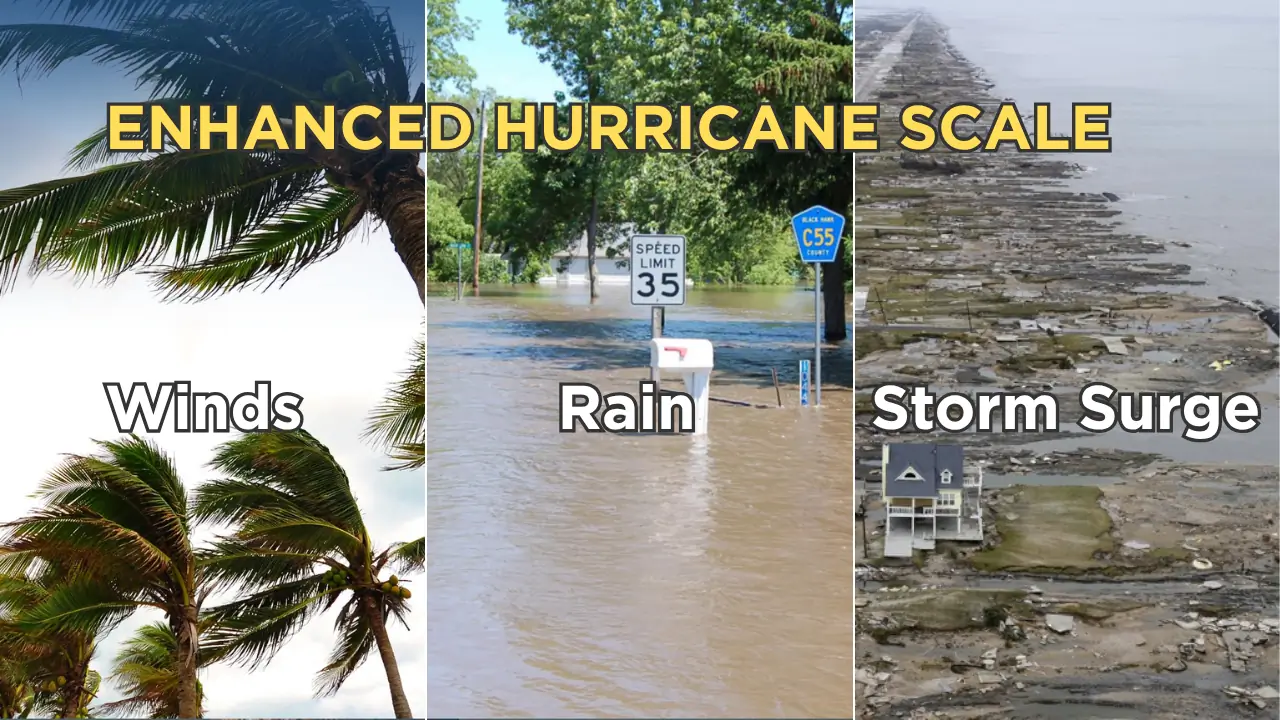
Most of us are familiar with how hurricanes are categorized.
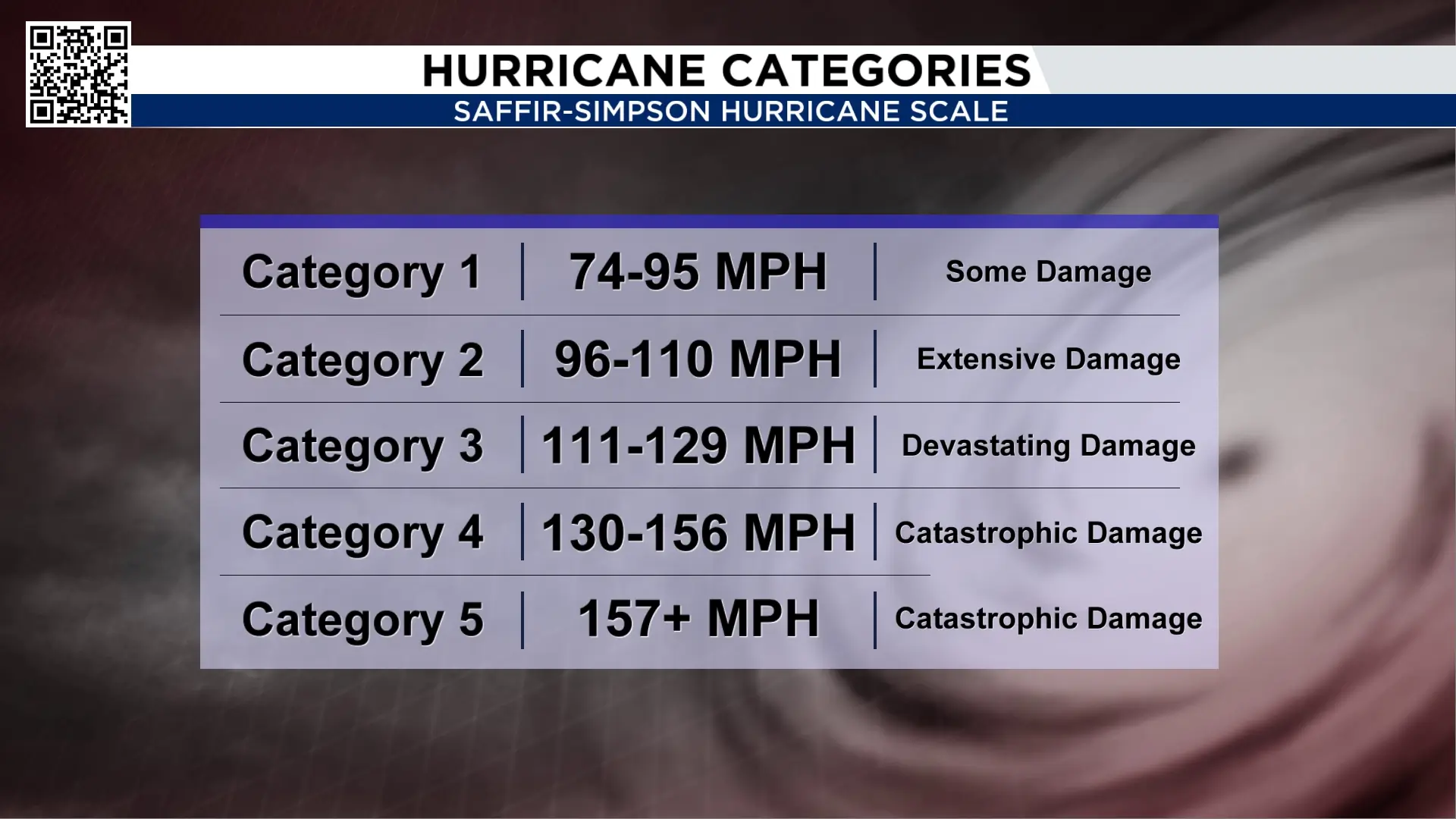
Storms are ranked from Category 1 to Category 5 based on their wind speeds using the Saffir-Simpson Hurricane Wind Scale.
The scale was developed in the early 1970s by engineer Herbert Saffir and National Hurricane Center director Robert Simpson.
At the time, there wasn’t a simple way to communicate the damage potential from hurricane-force winds, so they created a system that focused specifically on wind intensity and the type of damage those winds could cause.
But there’s a problem with how hurricanes are categorized.
The current scale only measures wind.
It doesn’t account for storm surge, inland flooding, or rainfall, even though storm surge is the deadliest part of a hurricane.
That’s why researchers in South Florida are proposing the idea of an “Enhanced Hurricane Scale.” The goal would be to rate hurricanes not just on wind speed, but also on storm surge and rainfall impacts.
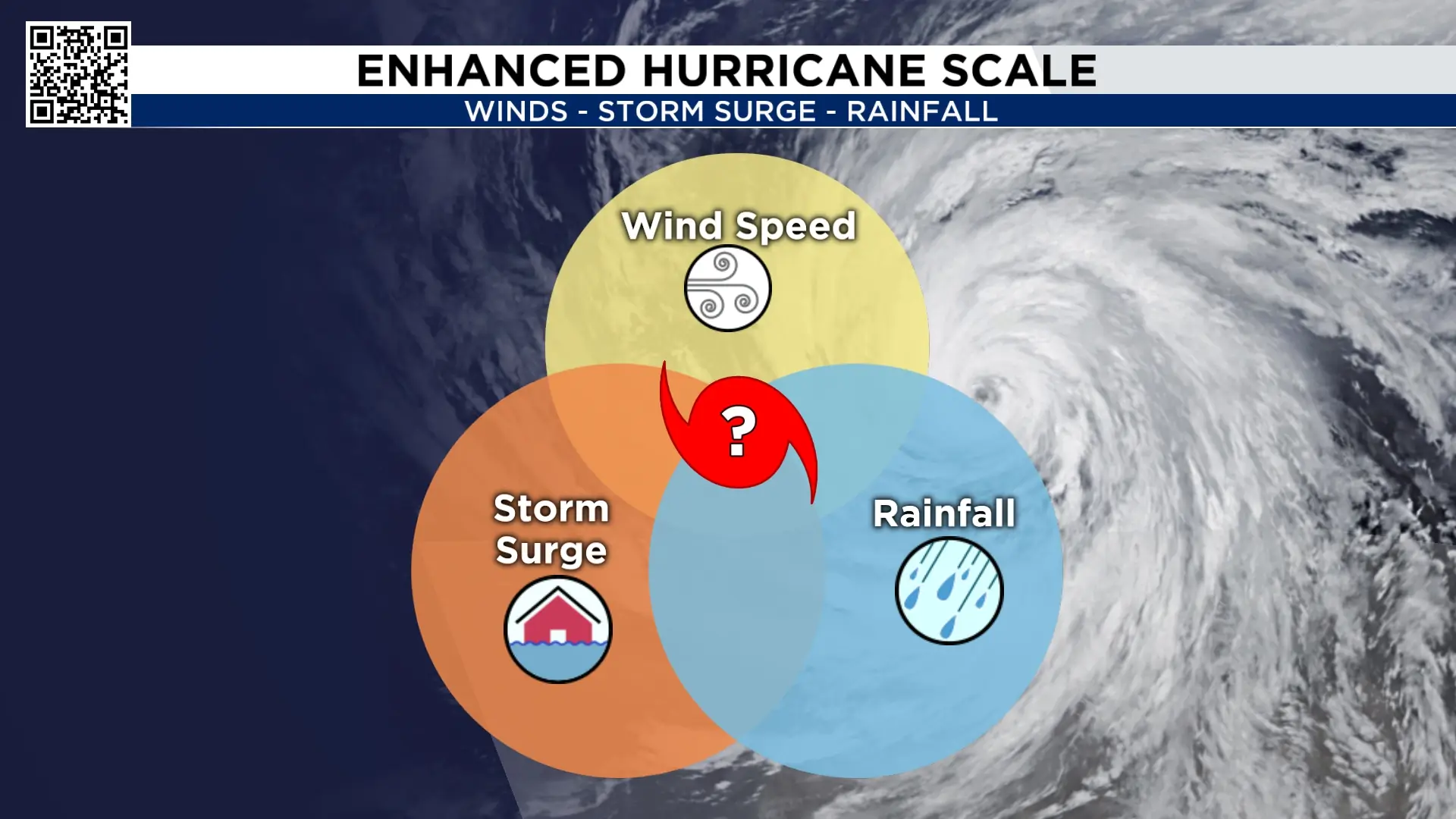
The idea is similar to the Enhanced Fujita Scale used for tornadoes. Instead of focusing on just one factor, the scale would combine wind, storm surge, and rainfall into a single impact rating.
For example, imagine a storm with relatively modest winds, but catastrophic storm surge and historic flooding rainfall totals. Under this proposed system, that storm could receive a much higher rating because of its overall impact.
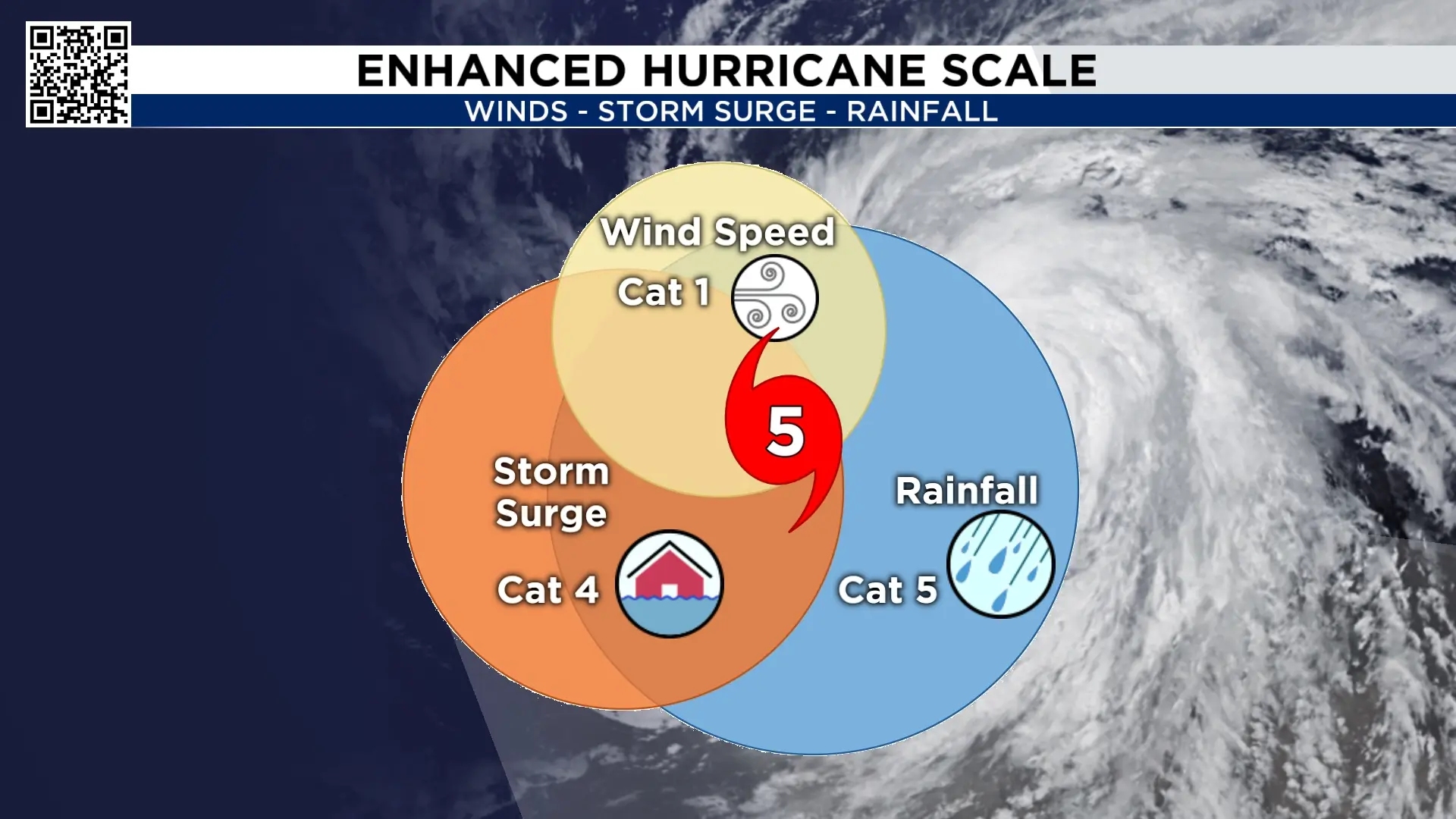
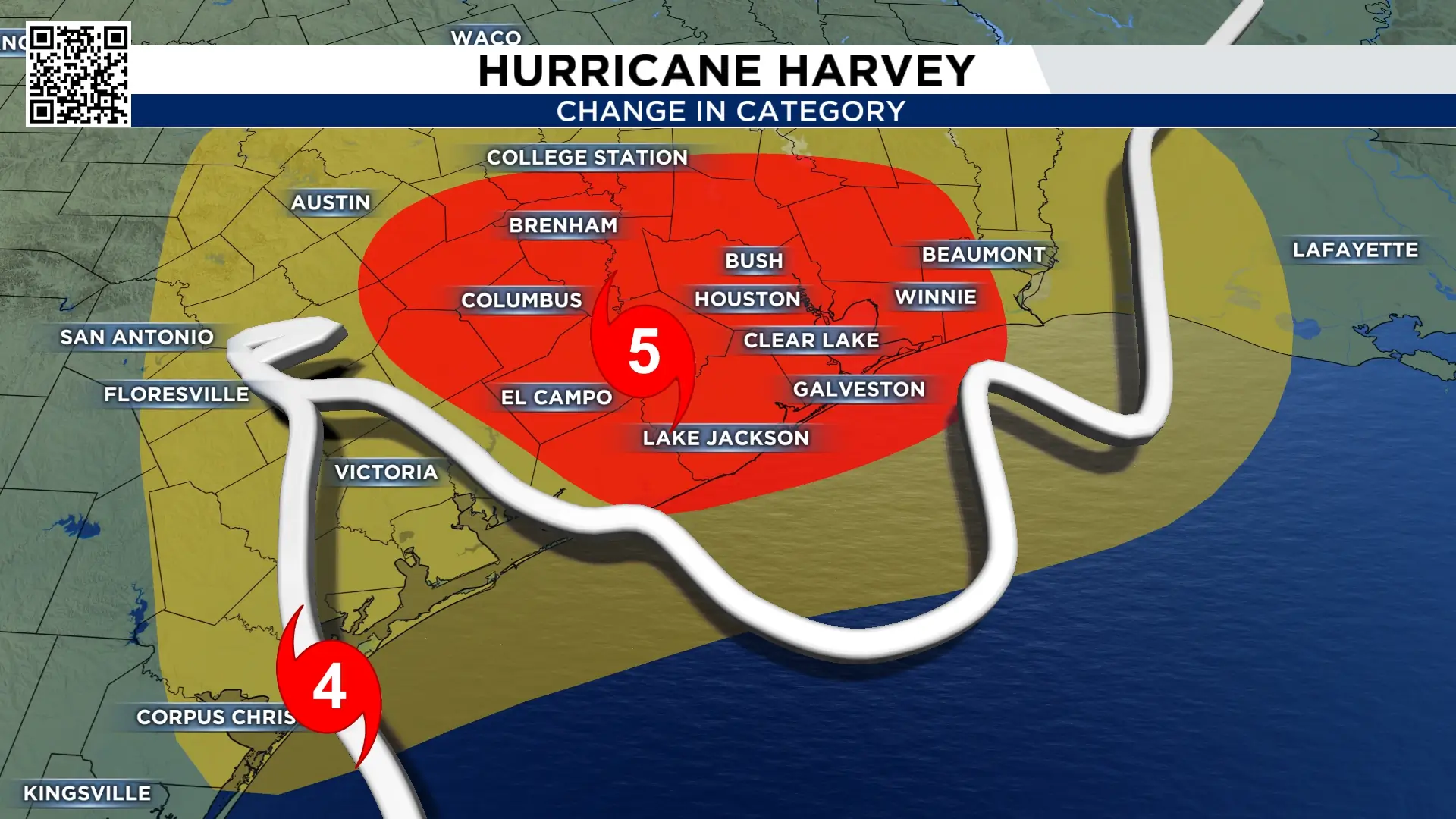
What you are looking at in the above graphic is how Harvey would have been rated for Houston.
Harvey made landfall near Corpus Christi as a Category 4 hurricane. But by the time it stalled over Southeast Texas, it had weakened significantly in terms of wind speed. It was not classified as a hurricane in Houston.
Yet we all know what happened next.
Historic flooding devastated Houston and changed countless lives. Under an enhanced scale focused on total impact, Harvey would have been categorized as a Category 5 in Houston before the storm ever made landfall.
But does an enhanced hurricane scale make sense?
There are definitely benefits. It would help communicate the full danger of a storm, not just the wind threat. It could better highlight flooding rain and storm surge, which are bigger, life-threatening hazards.
But there are also challenges.
Unlike wind speed, rainfall and storm surge impacts can vary dramatically from one location to another depending on the track and movement of the storm. One community could experience catastrophic flooding while another nearby sees far less impact. That could make the ratings more confusing for the public.
And for now, this idea is still just a proposal. Changing the scale isn’t being considered by NOAA, the people in charge.
So, what’s the most important takeaway?
Never focus only on the category number.
Whether it’s a tropical storm, a Category 1 hurricane, or a major hurricane, the real question should always be:
What are the impacts where you live?
That’s what helps families make the best decisions to stay safe, no matter the category.
To help get you prepared for this hurricane season, the KPRC 2 Weather Team is presenting our Hurricane & Flood Survival Guide on Wednesday night at 8:00. You can watch on TV, click2houston.com or KPRC 2+. Hope you can tune in.

More Stories Like This In Our Email Newsletter
