
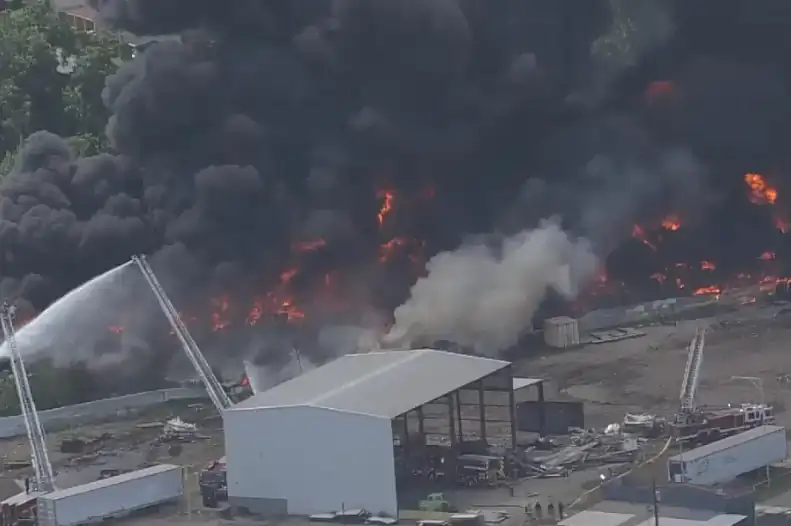
HOUSTON – It has been three days since a massive fire at a recycling facility in Houston’s East End.
Over 100 firefighters fought the flames at Mammoth Metal Recycling, which burned overnight and into Tuesday.
Recommended Videos
While no injuries were reported and the exact cause remains under investigation, another topic of concern is the potential for negative health impacts to residents in the immediate vicinity of the fire and beyond.
The Texas Commission on Environmental Quality (TCEQ), and the U.S. Environmental Protection Agency are monitoring air quality and water runoff in the surrounding area.
But Air Alliance Houston, a clean air advocacy group, is pressing state environmental officials for more and wants to know exactly how air quality is being tested and where that data is.
The group says its closest air monitor, located 4 miles from the fire site, detected elevated levels of fine particulate pollution. State environmental regulators, however, have yet to share their findings.
What is PM2.5?
A pollutant that was specifically mentioned by Air Alliance Houston was PM2.5.
PM2.5 refers to microscopic airborne particulate matter that are 2.5 micrometers or less in diameter.
The U.S. Environmental Protection Agency says this type of particulate is 30 times smaller than a human hair. This means they can be easily inhaled, going deep into the lungs or even the bloodstream.
Dr. Denae King, Associate Director of the Bullard Center for Environmental and Climate Justice at Texas Southern University, says those that are exposed to elevated levels of fine particulate pollution could have trouble breathing or get a respiratory illness.
“If you have long-term exposure to things like PM2.5 and even smaller sizes of particulate matter, it can result in things like lung cancer and COPD and other long-term respiratory illnesses,” she said.
Cardiovascular concerns can also be associated with exposure to elevated levels of PM2.5 for a long-term period.
Air monitoring explanation
King explained the network of air monitoring sites that have been placed around Houston and the differences between what state agencies use.
“TCEQ has regulatory or reference-grade monitors and those monitors are extremely expensive, monitors that the state uses when we think about enforcement or when we think about regulatory agencies, confines of setting regulations and those kind of things, but those are placed very far and few and so in order to make sure that communities can understand what particulate matter really looks like in their communities, they have now really worked together to put together networks or monitors in their neighborhoods, and at their homes, at daycares and churches, public places.” she said.
King says these neighborhood monitors are helping give communities a better picture of particulate pollution in their neighborhoods and also giving a better picture about potential health impacts.
“We dodged a major bullet”
King says despite how large the fire was and how close it was to a neighborhood, it could have been much worse.
“We dodged a major bullet on Monday when you think about it, I mean there’s a neighborhood there,” she said. “For the most part, we have not heard of any major illnesses that resulted from the fire.”
King hopes that this event will lead to conversations about where else facilities like this could be placed.
“We don’t have zoning here in Houston, but that doesn’t mean that we can place any type of an industrial facility next to a community, so I think it gives us an opportunity to take some time to stop and think about where facilities are placed and how we really prioritize our residents and our health,” she said.