
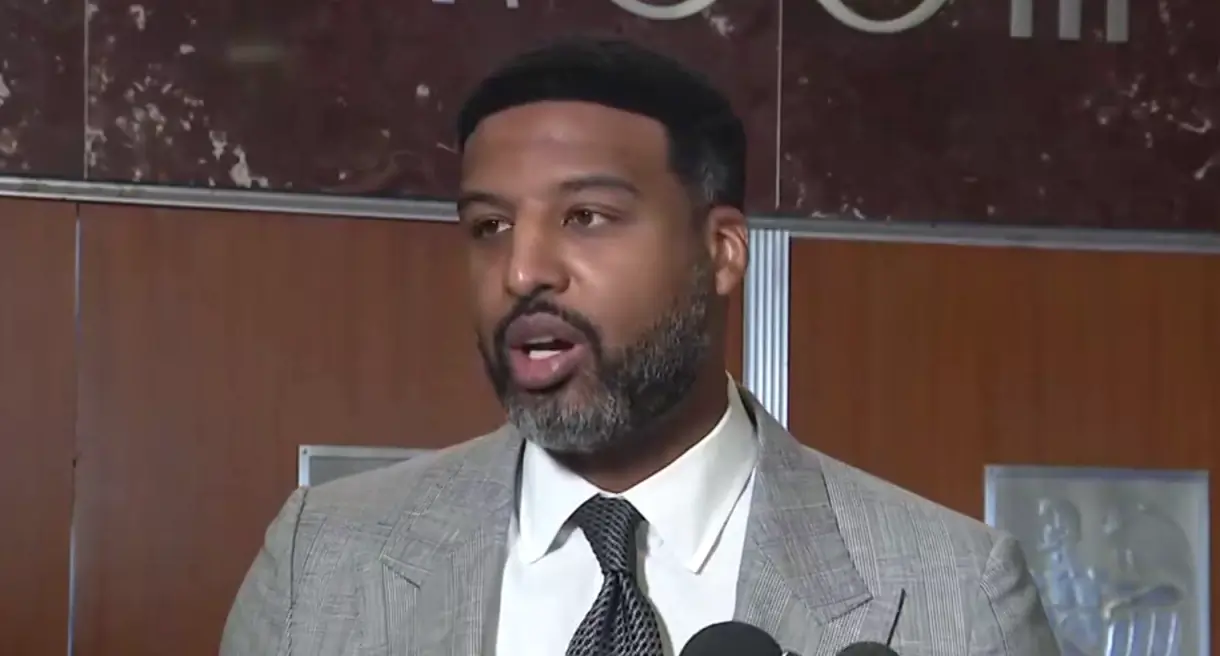
HOUSTON – Houston City Council has moved a proposal to repeal the city’s campaign loan repayment caps to the council’s Ethics and Governance Committee for further review, as members debate whether the ordinance violates constitutional free speech protections or helps prevent wealthy candidates from dominating local elections.
The proposal was backed by Council Member Edward Pollard, would repeal Houston’s limits on how much candidates can repay themselves using campaign donations after loaning money to their own campaigns.
Recommended Videos
The debate comes as campaign finance records show Pollard loaned his campaign $1 million at a 0% interest rate while city leaders consider eliminating the repayment caps.
Pollard argued during council discussions that Houston’s ordinance conflicts with a 2022 U.S. Supreme Court ruling in Federal Election Commission v. Ted Cruz for Senate, which struck down a federal restriction on post-election loan repayments.
“In 2022, the Supreme Court ruled that putting caps on campaign finance loan repayments was unconstitutional,” Pollard said. “It violated the First Amendment as it related to free speech. We currently have an outdated local ordinance that is in conflict with that ruling.”
Houston City Attorney Arturo Michel acknowledged the city’s ordinance may face legal challenges under that Supreme Court decision.
“Well, the language of our ordinance is similar to the federal regulation that Senator Cruz challenged under federal law,” Michel said. “The memo I had written under the last administration and also the lawfulness memo addresses a concern that our ordinance may not be legally supported.”
Houston’s current ordinance limits how much candidates can reimburse themselves using campaign contributions:
- Mayoral candidates are capped at $75,000
- Citywide candidates at $15,000
- District council candidates at $5,000
Several council members said they support reviewing the ordinance but raised concerns about fully removing the restrictions.
Council Member Amy Peck warned that eliminating the caps outright could make it harder for non-wealthy candidates to compete.
“My concern is that if we remove every single guard rail, we risk a system where only wealthy individuals can afford to run for office,” Peck said.
Peck also suggested the city could explore alternatives that address constitutional concerns while preserving ethics safeguards, including stricter disclosure requirements and time limits for post-election fundraising tied to loan repayments.
“It is not that I am opposed,” Council Member Twila Carter said. “I think we really need to take a hard look.”
Carter also raised ethical concerns about unrestricted loan repayments.
“If I have a million dollars to throw in and my brother-in-law pays me back and I get to repay myself, that seems to be a little bit of an ethics violation,” she said.
Council Member Joaquin Martinez, who chairs the Ethics and Governance Committee, said council members are now taking a deeper look at Chapter 18 of the city ordinance governing campaign finance and ethics rules.
Mayor John Whitmire also signaled support for broader campaign finance discussions, while warning against creating a system that favors wealthy candidates or special interests.
“If you don’t have a limit for millionaires to come in and essentially buy the election, it’s not in the public interest,” Whitmire said. “You don’t want just the wealthy able to run and win, and then also you don’t want special interest to repay that personal loan.”
The Ethics and Governance Committee is expected to continue reviewing the proposal and potential alternatives before any final action is taken by city council.
