

The best meteor shower of the year reaches its peak Wednesday night into early Thursday morning.
And this year, we have a big advantage: the peak coincides with a new moon, so there’s no bright moonlight to wash out the meteors. That means viewing conditions should be ideal.
From the suburbs, you could see around a dozen meteors per hour. In the brighter, more light-polluted skies of the city, you may see about half that. But if you can get to a darker, rural location, you could see two dozen or more meteors per hour.
You may start spotting a few as early as 10 p.m., but the later you stay up, the better the show gets.
The best viewing will be between 2 and 4 a.m. For the best chance of seeing meteors, find the darkest part of the sky, get away from city lights, and look up!
How the Perseids got their name:
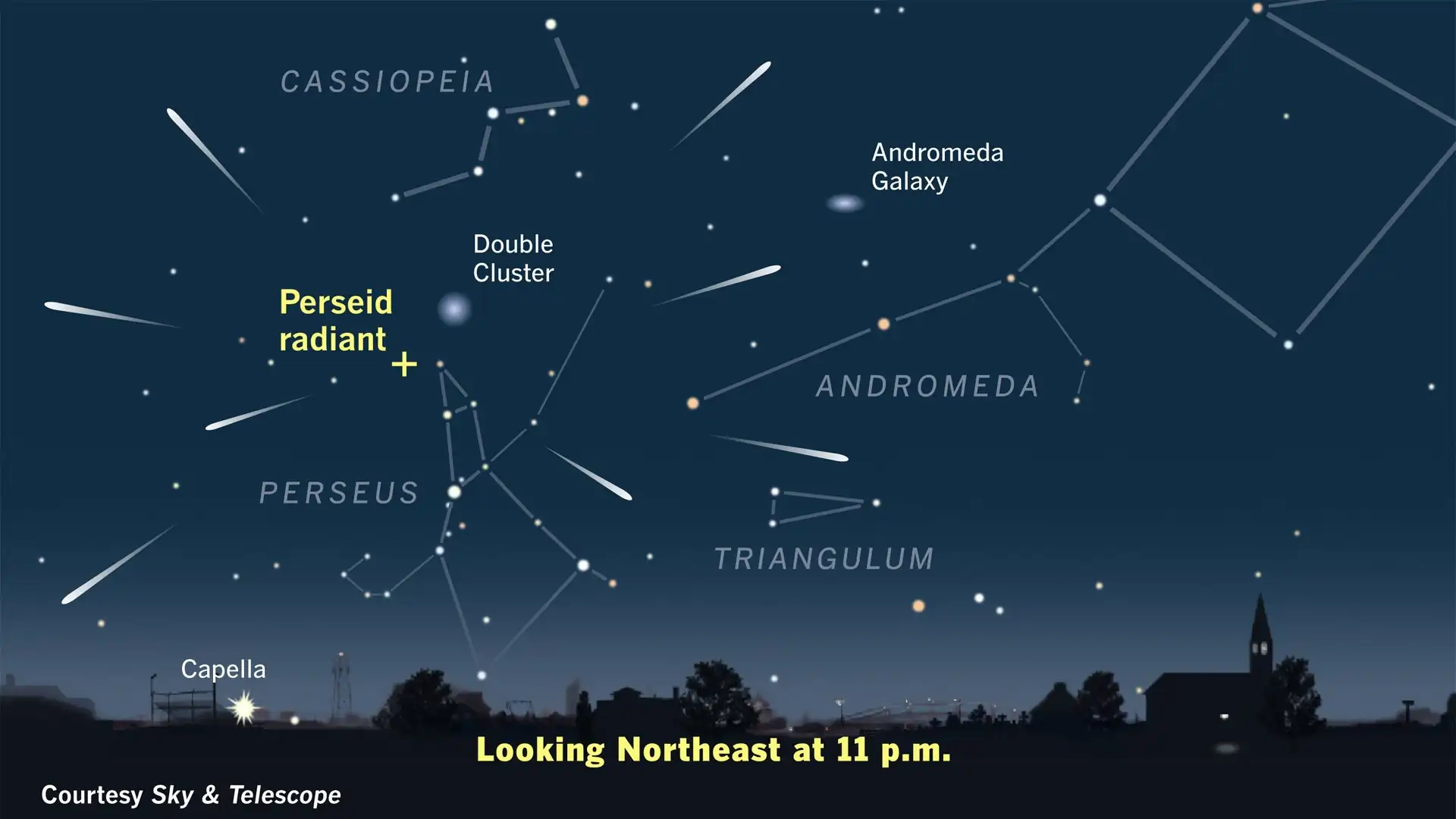
The Perseid meteor shower gets its name from the constellation Perseus.
If you trace the streaks of light across the sky, they appear to come from a point near this constellation. Astronomers call that point the “radiant.”
The Perseids have been observed for centuries. Records date back to 36 A.D. in China. In 1836, Belgian-French astronomer Adolphe Quetelet recognized that the meteor shower returns every August and gave it the name Perseids.
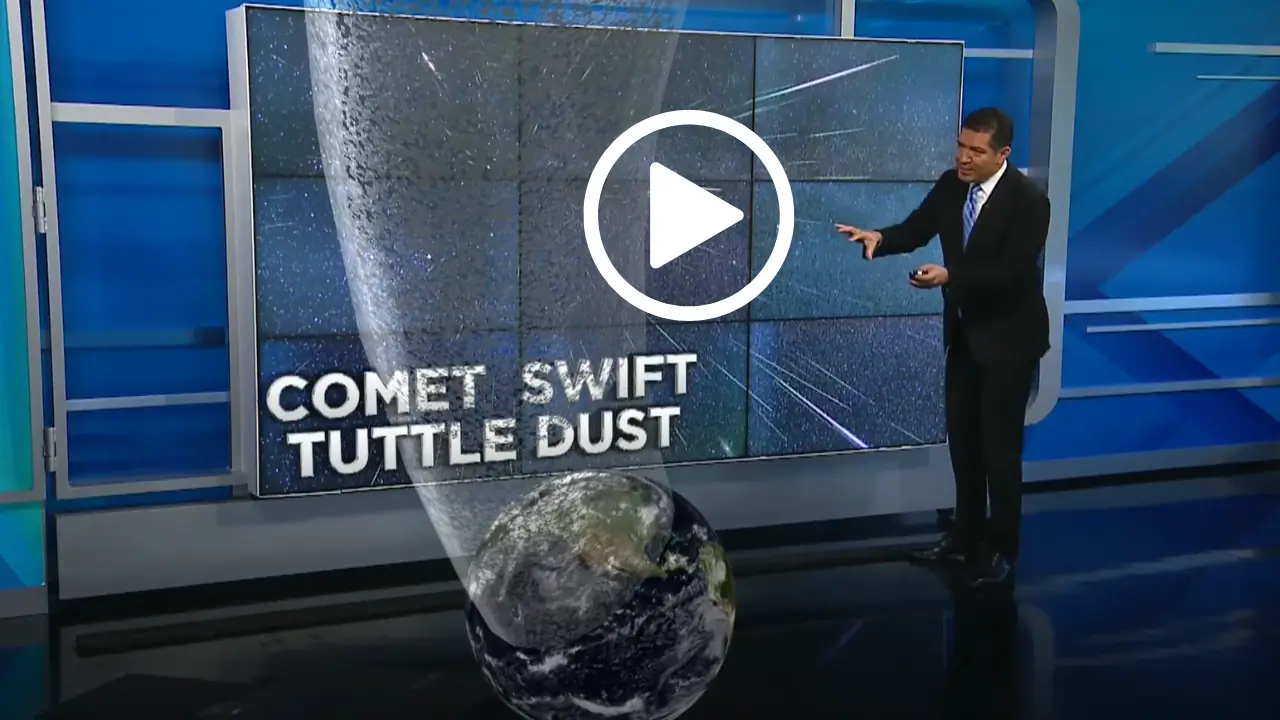
In 1862, American astronomers Lewis Swift and Horace Tuttle independently discovered that the meteors are tiny pieces of debris left behind by a comet.
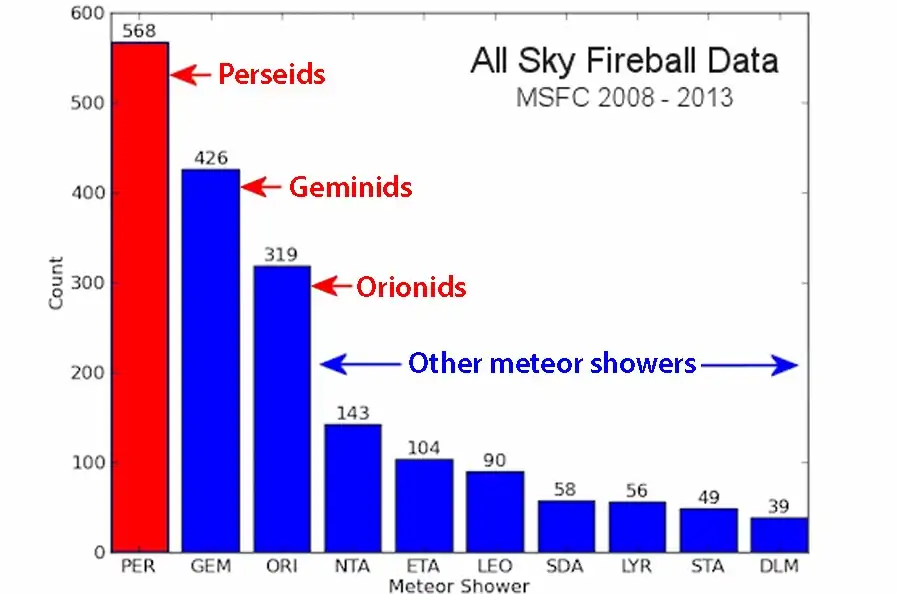
That comet is now known as Swift-Tuttle, and it’s a big one, about 16 miles across, making it one of the largest known periodic comets. No other meteor shower matches the number of the Perseids.
What meteors look like:
It is inaccurate to call them shooting stars because they are pieces of rubble similar in shape, size, color, and texture to Grape Nuts cereal. This cereal is still on store shelves.

What you are actually seeing in the sky:
Perseid meteors race through space at about 37 miles per second, that’s roughly 133,000 miles per hour!
When one of these tiny particles hits our atmosphere, about 60 miles above Earth, it compresses the air in front of it, much like water piling up in front of a speeding boat.
That creates an incredibly hot shock wave, and that’s what produces the bright streak of light we see across the sky.
So, you’re not actually seeing the tiny piece of comet burn up. You’re seeing the glowing air around it as it races through the atmosphere.
None of the tiny pieces that create the Perseids never make it to the ground.
I put together a video explaining why the Perseids, and other meteor showers, return every year. Just keep in mind, that video was made three years ago, under a different moon phase.
When and how to watch:
The best time to catch the Perseids is in the hours just before dawn Thursday, when the radiant, the point in the sky where the meteors appear to originate, is at its highest.
When the radiant is lower on the horizon, more meteors are hidden from view. So, the later you stay up, the better your chances of seeing more.
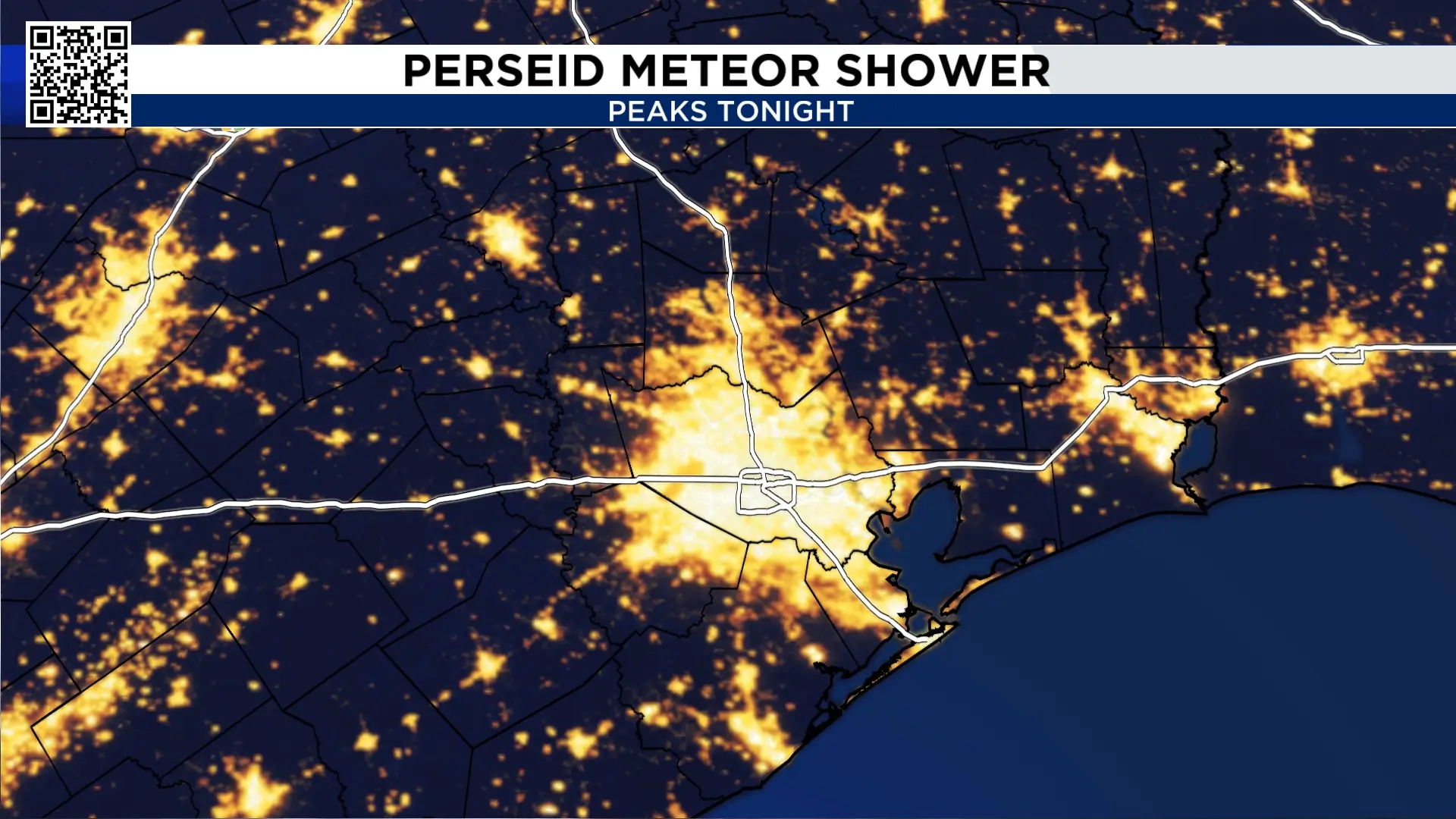
For Houston-area stargazers, the biggest challenge is light pollution. City lights can wash out the night sky, making fainter meteors harder to see. If you can, head somewhere darker.
And remember, the meteors can appear anywhere across the sky, you don’t have to stare directly at the radiant.
Here’s more good news, the forecast calls for mostly clear skies.
You don’t need any special equipment. Just find a spot with a wide-open view, grab a lawn chair, and look toward the darkest part of the sky.
Give your eyes about 20 minutes to adjust to the darkness. Once they do, you’ll have a much better chance of catching those shooting stars.
If you take any great pictures, please post on Click2Pins or share with me on Facebook or Instagram at: @kprc2anthony

More Stories Like This In Our Email Newsletter
