
PHOENIZ, Arizona – When Arizona expanded its Education Savings Account (ESA) program statewide in 2022, it opened the door to a different approach to educating children.
Now, as Texas gets underway with its own Texas Education Freedom Account (TEFA) program, the experience in Arizona offers an early look at what can happen when taxpayer-funded education dollars follow families beyond traditional public schools.
Recommended Videos
ENOUGH’s Rilwan Balogun and Roger Franco traveled to Phoenix to see how Arizona’s program is working on the ground and to hear from the families, educators and state officials who see it very differently.
One Arizona education advocate described the program bluntly.
“It’s been the Wild Wild West,” said Beth Lewis with Save Our Schools Arizona, a non-partisan, community-based organization supporting strong public schools.
RELATED | Texas school vouchers program raises questions over how families can use funds
That divide runs through nearly every conversation about Arizona’s ESAs. Supporters say the program gives families options they may not otherwise have, including access to microschools and other alternative approaches to education. Critics argue that the rapid expansion has created questions about oversight, accountability and the impact on traditional public schools.
For Texas, the question is no longer simply whether families should have more choices. It is what those choices will look like once public dollars begin flowing through the new system.
A different kind of school
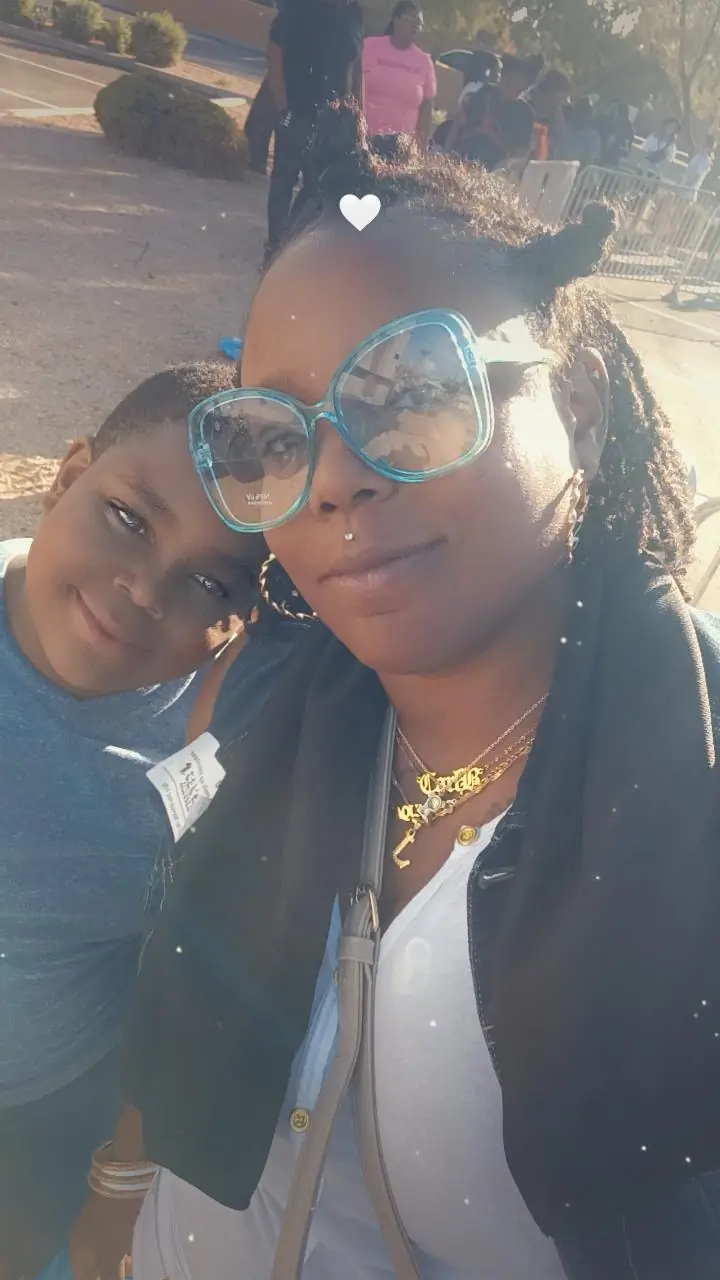
At School to Purpose, operated by the Black Mothers Forum, the traditional idea of a school is turned on its head.
The facility is divided into individual microschools, with blended classrooms serving different age groups. In one classroom, students from kindergarten through third grade learn together.
Tiffany Dudley, the organization’s executive director, says the model is intentionally different from a conventional school.
Rather than organizing instruction strictly around individual grade-level standards, the school teaches concepts that students can approach at different levels of complexity. A coach might begin with the entire classroom before breaking students into smaller groups, where they rotate between individualized instruction, activities and computer work.
And the adults leading the classrooms aren’t necessarily viewed as traditional teachers.
“We look at it more like a coach,” Dudley explained. She said the role is to help students learn rather than serve as their sole source of knowledge.
That distinction is central to how School to Purpose approaches education.
Gabrielle Shorter, a parent at the school who later became a coach herself, said she was drawn to smaller classes after her son struggled in traditional classrooms during kindergarten, first and second grade.
By fourth grade, she said, the environment at School to Purpose gave him room to develop his voice and understand that he was in a safe space.
The experience ultimately changed Shorter’s career. She moved from the health industry into education and became a coach at the microschool.
“If you’re looking for a traditional school, it wouldn’t be a micro school,” she said.
Supporters see choice and opportunity
For supporters of microschools, the fundamental argument is that education shouldn’t have to be one-size-fits-all.
Dudley also rejects the idea that creating a microschool necessarily means taking something away from a public school. In her view, public schools, charter schools and microschools can coexist.
That perspective reflects a larger philosophical question at the center of the ESA debate: What should be the ultimate goal of the education system?
When asked what she would tell Texas families who worry that school choice could harm public schools, Dudley put the question differently: is the goal simply to have good public schools, or is the goal to serve children?
Critics see a system with too little oversight
Arizona’s ESA program has another side.
Lewis, director of Save Our Schools Arizona, argues that the state’s experience shows the risks of expanding education savings accounts without sufficient oversight.
She says Arizona’s voucher system began in 2011 as a targeted program, including for students with disabilities, before becoming universal in 2022.
She also points to concerns about how ESA dollars are spent.
Lewis says Arizona has seen cases involving what she describes as fraud, waste and abuse, and argues that the program has allowed purchases with too few questions asked up front.
Tom Horne, Arizona’s state superintendent of education, sees the issue differently.
When asked about criticism of fraud and waste in the ESA program, Horne said those concerns are exaggerated. He said less than 2% of dollars spent had been questioned as improper purchases and that the actual fraud figure, in his estimation, was 0.3%.
MAP: See Texas school voucher applications and awards by school district
Horne also acknowledged a challenge created by the scale of the program.
“We have the same number of personnel for 108,000 students that were designed for 11,000 students,” Horne said. “So, we can’t possibly vet everything before it’s paid.”
Horne said that means the state cannot vet every purchase before money is spent.
Instead, he said, the state identifies improper purchases afterward and seeks to recover the money. Families can be required to repay funds, banned from the program and, in major cases, referred to the attorney general for collection or prosecution.
For Texas, that may be one of the clearest lessons from Arizona: oversight isn’t simply a question of whether rules exist. It is also a question of whether the state has enough people and systems to enforce those rules as participation grows.
Horne believes Texas has already taken that lesson to heart.
“They’ve learned from our mistakes,” Horne said.
But what does accountability look like?
The question of accountability extends beyond how money is spent.
WATCH OUR INTERVIEW WITH ARIZONA INVESTIGATIVE REPORTER JOE DANA
Critics of Arizona’s program question the academic accountability of private schools, charter schools and microschools that do not operate like traditional public schools.
Horne said that if the legislature required students participating in the program to take state tests, the department would administer them. But under the current approach, he said, the theory is that parents themselves are the accountability mechanism.
In other words, families are expected to judge whether a school or educational provider is working for their children and leave if it isn’t.
Horne’s advice to parents is straightforward: choose carefully, and if the choice doesn’t work, make another choice.
But that argument raises a question Texas will have to answer for itself: is parental choice enough to demonstrate that children are receiving a quality education?
Curtis Finch, superintendent of Deer Valley Unified School District in Phoenix, says it isn’t.
“I don’t have a problem with choice,” Finch said. He said he has no problem with microschools, charter schools or private schools. But he wants them to take the state test and demonstrate that they are actually teaching students.
Public schools feel the impact
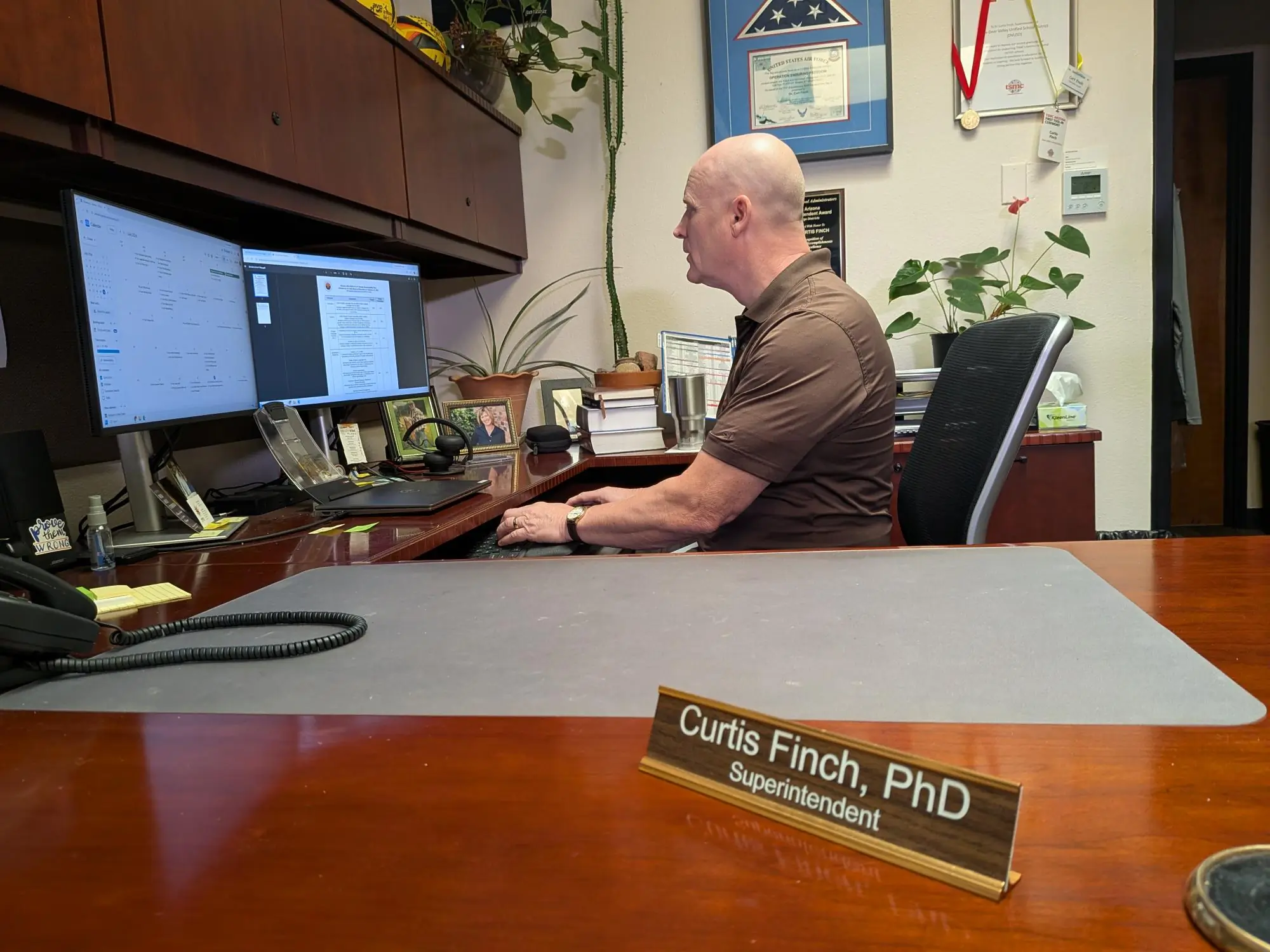
For Finch, he says his district has lost nearly 1,200 students to ESAs between 2017 to 2026 and that each departing student represents funding leaving the district.
Finch sees ESA expansion as one major factor contributing to the pressure on public school systems.
He argues that public schools face a responsibility that other educational providers don’t: if a student lives in the district, the district has to take that child. Private schools and other educational providers, he points out, can decide which students they will accept.
That difference, he argues, makes the concept of “choice” more complicated than simply allowing parents to select where their children attend school.
“They don’t have to let your kid in,” Finch said referring to private, homeschools, and microschools. “Every student that comes to Deer Valley, if they are a resident of my district, I take them.”
Finch says he has also seen students return back to his district after their families determine that the program they chose wasn’t meeting their needs.
For him, the question isn’t whether families should have options. It’s whether every educational option receiving public money should meet some standard of accountability.
A parent says the choice is personal
Families experiencing the system firsthand see the issue through a different lens.
Shorter describes her son’s experience in public school as the reason her family began looking for something else.
At School to Purpose, she says, the emphasis on behavior, personal development and finding a child’s voice is part of education, not separate from it.
When ENOUGH’s Rilwan Balogun asked whether children at microschools are being adequately educated, she pushed back on the premise that academic education and personal development should be separated.
“Becoming a better person is educating them,” she said.
Arizona’s experience offers Texas a warning and an opportunity
Arizona’s ESA program doesn’t produce a single answer.
Supporters point to families who found an educational environment that they believe better fits their children. Microschools have emerged as one example of what can develop when families have access to education dollars outside a traditional public school setting.
Critics point to the consequences of rapid expansion: questions about spending, oversight, academic accountability and the financial pressure placed on public school districts.
And Arizona’s state superintendent argues that Texas has an advantage Arizona didn’t have: the opportunity to learn from what happened there.
For Texas families, that may be the most important lesson.
As the TEFA program gets underway, the experience of Arizona suggests that the debate won’t end when families are given the ability to choose.
Dudley believes the key is understanding the program before judging it.
She said she had to take the time to research ESAs and understand how they affect children and families.
Lewis has a different message for Texans concerned about what happens to their public schools: look beyond the local principal, school board or superintendent and pay attention to the decisions being made by the state legislature.
For Texas, Arizona is now a case study playing out in real time.
The state has demonstrated what a universal ESA system can make possible. It has also exposed the questions that emerge when public education dollars follow families into a much broader and less traditional educational marketplace.

