
Hurricane-force winds can knock out power and tear roofs apart. The powerful winds also contribute to coastal flooding through storm surge.
Storm surge, in basic terms, occurs when strong winds from a hurricane or tropical storm push water towards shore, causing it to rise rapidly.
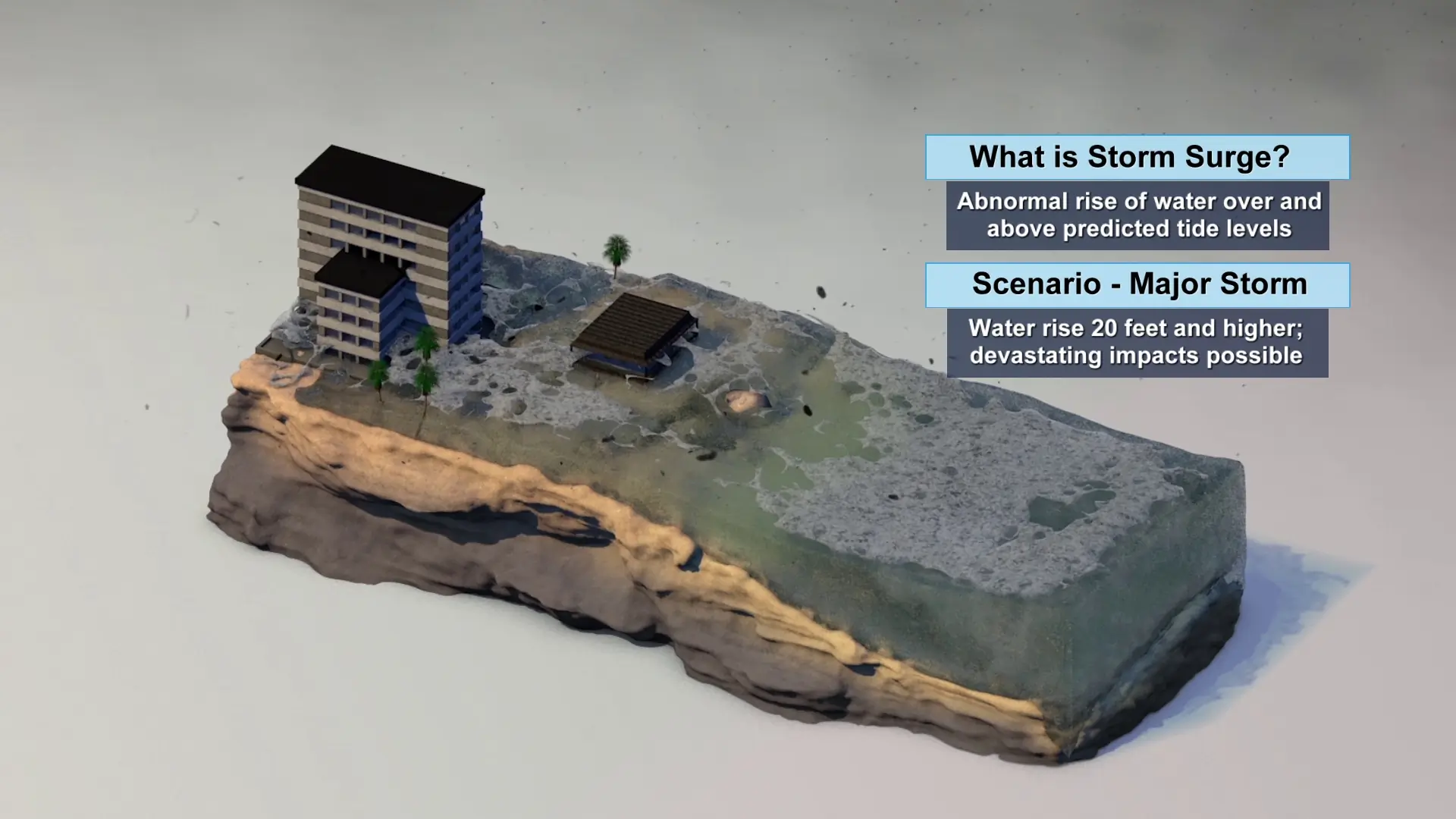
The Gulf Coast is no stranger to this destructive wall of water - Rita’s storm surge towered 15 feet, Ike’s storm surge climbed to 17 feet, and Katrina reported a 28-foot storm surge , which is the height of a telephone pole! Katrina and Rita were Category 5 storms, while Ike was a Category 2 - despite the vastly different wind speeds, the storm surge impact remained the same, devastating.
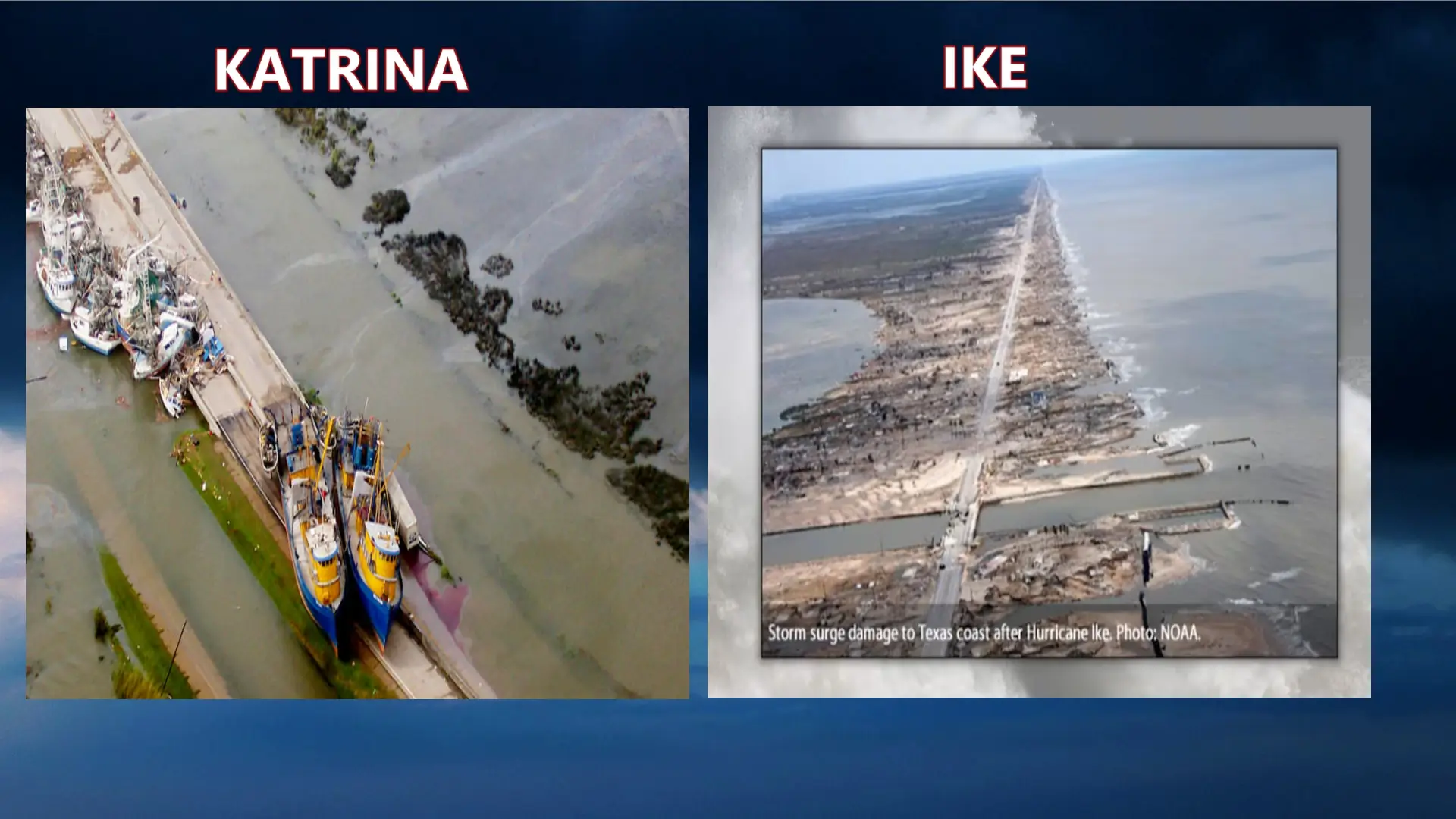
Water during hurricanes and tropical storms is responsible for 90% of fatalities, according to NOAA, and half of those are due to storm surge.
Remember, we can hide from wind but can’t run from water, so if your zip code is ever in an evacuation order, you’ll want to take those instructions from local officials seriously.
