

Hurricane season is here — and the science is clear. Climate change is not creating hurricanes, but it is making them more dangerous. From the Gulf of Mexico to the streets of Houston, three major shifts are underway, and every coastal resident needs to understand them.
Warmer oceans are the starting point
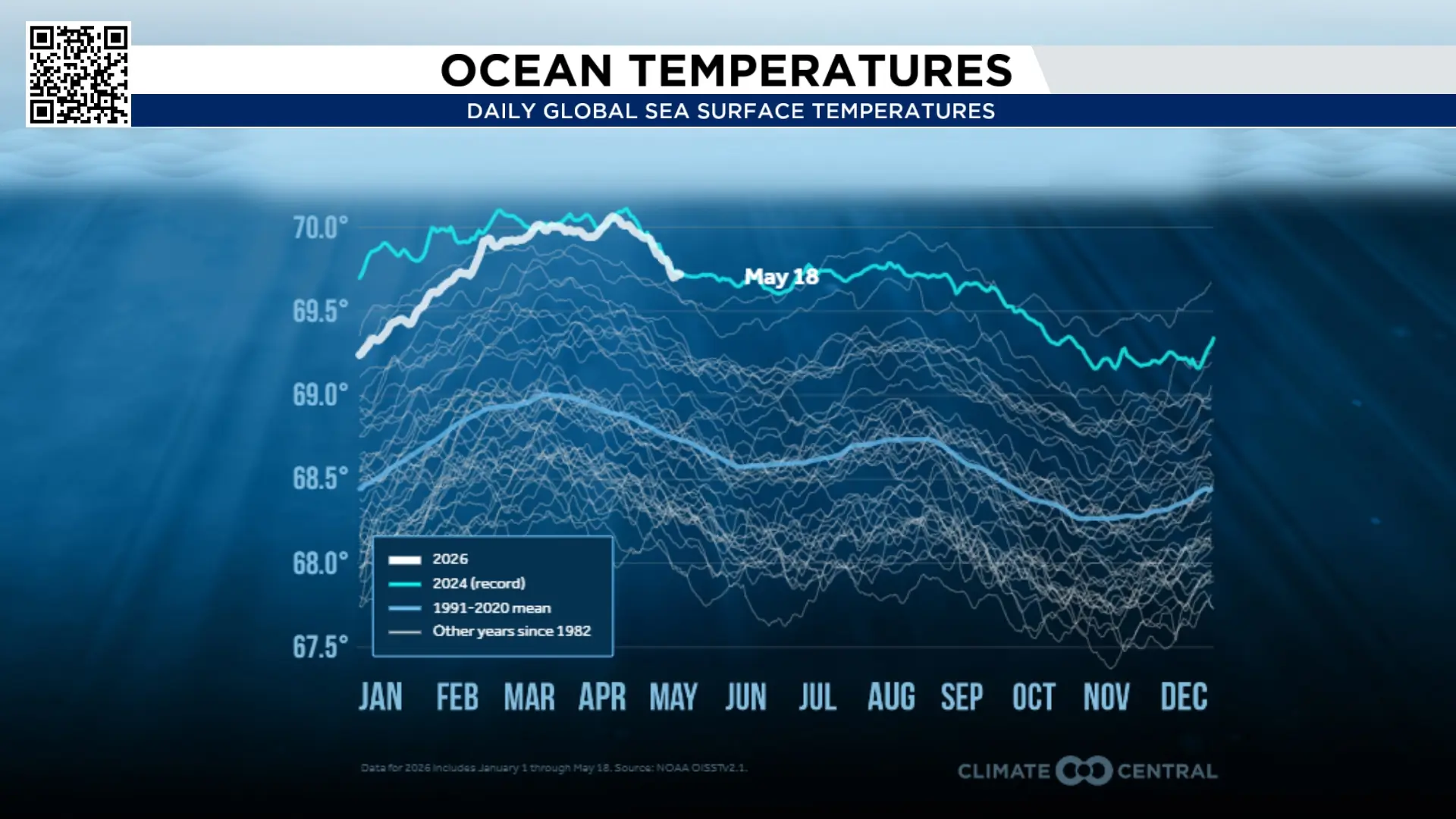
Hurricanes run on heat. The warmer the ocean, the more energy a storm can pull from the water below it. Right now, global sea surface temperatures are running well above average — in 2026, nearly tracking the record-breaking levels we saw in 2024. That sustained ocean warmth is not a seasonal anomaly. It is a trend, and it is loading the atmosphere in favor of stronger storms.
Storms are spinning up faster
One of the most alarming changes scientists are tracking is rapid intensification — when a hurricane’s winds increase by at least 35 miles per hour in a 24-hour window. Data from 1980 through 2024 shows this phenomenon is becoming more frequent. Storms are going from manageable to dangerous with very little warning time.
Houston knows this firsthand. When Hurricane Beryl crossed the Gulf in July 2024, it rapidly intensified fueled by record-warm ocean temperatures and sustained that strength all the way into the metro area. The power outages that followed lasted weeks for some residents. Rapid intensification is not a forecasting problem — it is a climate signal.

A warmer atmosphere means heavier rain
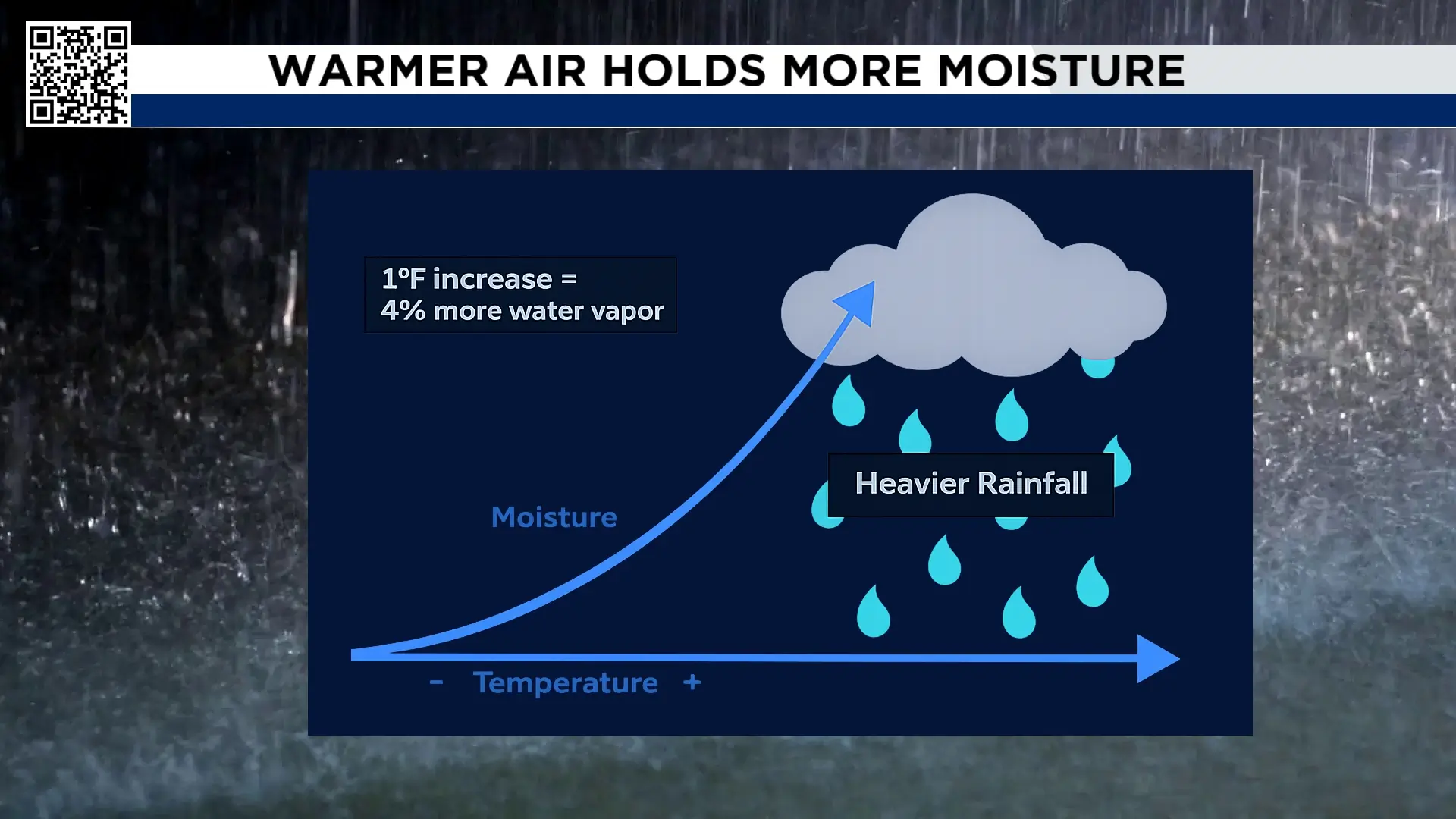
It is not just the winds getting more dangerous. The atmosphere itself is holding more water. For every degree of warming, the air can hold approximately 4% more water vapor. That translates directly into rainfall — storms that might have dropped several inches a generation ago are now capable of dropping significantly more.
Here in Houston, that trend shows up in the data. Rainfall intensity has increased 22% since 1970. We are not just getting more rain — we are getting it harder and faster. Hurricane Harvey in 2017 dropped more than 60 inches in some areas, a record that reshaped how meteorologists and engineers think about extreme rainfall. Harvey was not a fluke. It was a preview.
Rising seas make storm surge worse
Storm surge — the wall of ocean water pushed ashore by a hurricane’s winds — is historically the deadliest part of any storm. As global sea levels continue to rise, that surge starts from a higher baseline. Water that once stopped at the shoreline now reaches further inland, threatening neighborhoods that never flooded before.
For a low-lying, flat city like Houston, the math on storm surge is sobering. Infrastructure built to handle the storms of the last century is increasingly being tested by the storms of this one.

What this means for Houston
These are not distant threats. They are showing up in our data, in our streets, and in our power grid. Warmer oceans fuel stronger winds. Rising seas worsen storm surge. A warming atmosphere brings heavier rainfall. For Houston, all three converge at once.
No zip code is immune. The question heading into every hurricane season now is not whether these storms are getting more dangerous — the science has answered that. The question is whether we are ready.
