
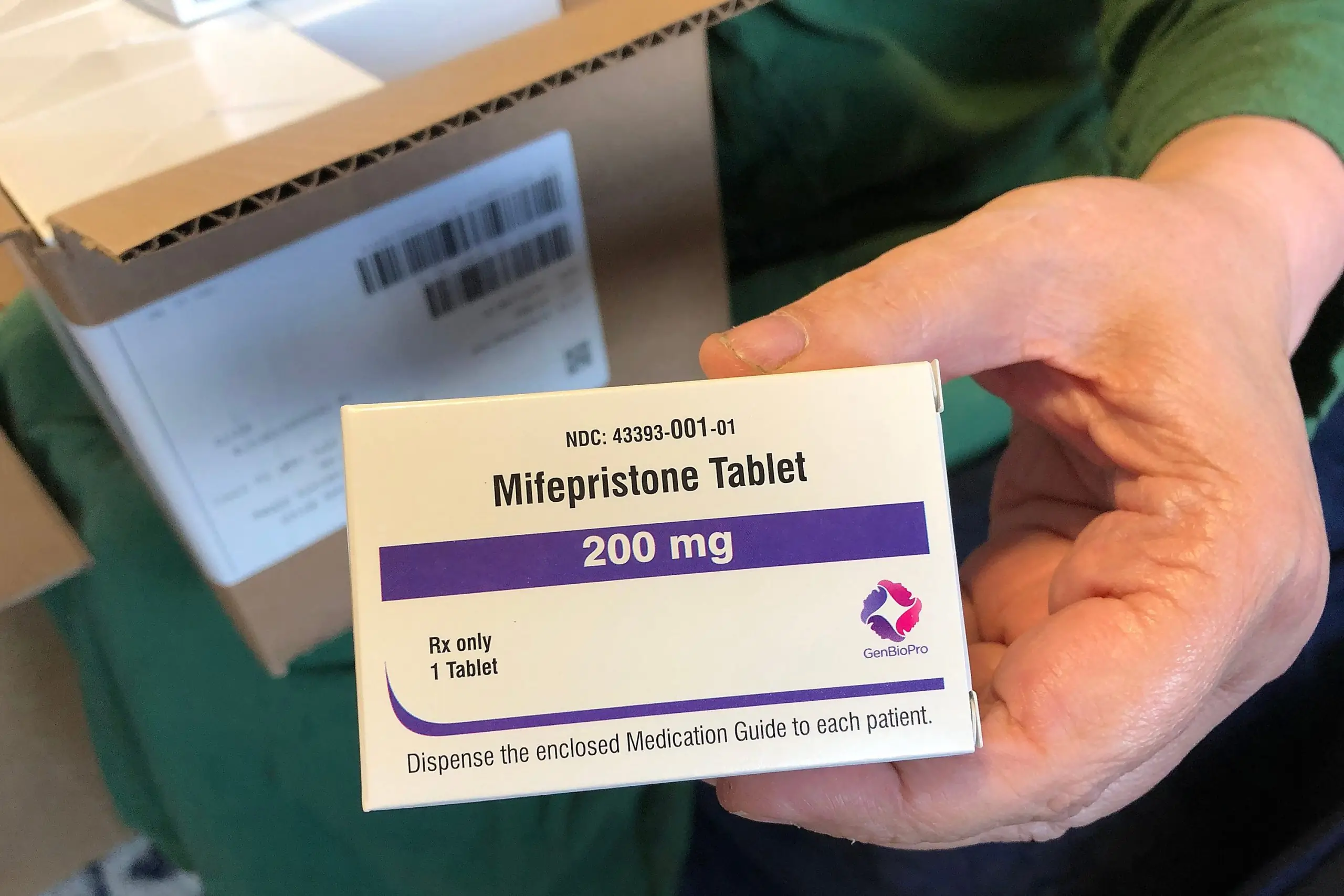
The U.S. Supreme Court on Monday temporarily blocked an appeals court decision to limit nationwide access to the abortion drug mifepristone.
Justice Samuel Alito, issued the hold to give the court more time to consider the 5th U.S. Circuit Court of Appeals decision last week to block a 2023 Federal and Drug Administration regulation that allowed mifepristone to be mailed to patients. That rule is commonly used to get around Texas’ abortion ban. Alito is the Republican-appointed justice charged with managing requests involving the 5th Circuit. His temporary hold is in effect until May 11.
Recommended Videos
The 2023 rule allowed doctors to prescribe mifepristone remotely and the drug to be mailed to patients, including those in Texas from other states where abortion is legal. The 5th Circuit’s ruling Friday, stemming from a lawsuit in Louisiana, means mifepristone can only be picked up in-person from doctors or pharmacies.
The ruling will halt the estimated thousands of telehealth abortion pills that are provided per month to states that otherwise outlaw abortion, but it will also restrict its availability for other uses. Mifepristone, when used alongside misoprostol, is the most common way Americans end their pregnancies, including to manage miscarriages. Through 2024, 1 in 4 abortions were provided through telemedicine, according to the Society of Family Planning.
Abortion advocates nationally decried the ruling as a crackdown aimed at restricting remote abortion access nationwide, particularly impacting states like Texas where mifepristone would not be available without telehealth services.
“Anti-abortion politicians know their policies are unpopular, so they are using every lever of government they can,” said Mini Timmaraju, CEO of abortion advocacy group Reproductive Freedom for All. “Louisiana built this case on debunked, junk science. The safety of mifepristone has never actually been in question.”
The FDA approved mifepristone in 2000, a generic version of the drug in 2019 and a second version last October, and studies have shown the drug to be safe and effective. Texas has joined Florida in suing the FDA over its original approval of mifepristone, arguing that the agency did not conduct proper safety evaluations.
Anti-abortion groups across the country, including the nonprofit Live Action, celebrated the ruling as a “major step toward justice” in permanently ending mail access to mifepristone and similar drugs.
“These drugs are designed to end the life of a preborn child, and they are now responsible for the destruction of millions of preborn lives, often behind closed doors with no doctor present,” Live Action Founder Lila Rose said in a statement.
Under House Bill 7, passed last year, doctors who prescribe or companies that distribute abortion-inducing drugs like mifepristone can be sued for up to $100,000. But 22 states where the medication is often prescribed have “shield laws,” which provide civil and criminal protections for healthcare providers who assist those in states like Texas with restrictive abortion laws. Pregnant people who seek out abortions or take abortion pills are exempt from litigation under the law.
It remains unclear how Friday’s ruling will affect lawsuits underway seeking to collect fines from out-of-state doctors who have provided mifepristone prescriptions, including three cases from Attorney General Ken Paxton against healthcare providers in California and Delaware. While the suit against the California doctor uses the new provisions under HB 7, the Delaware suit does not.