
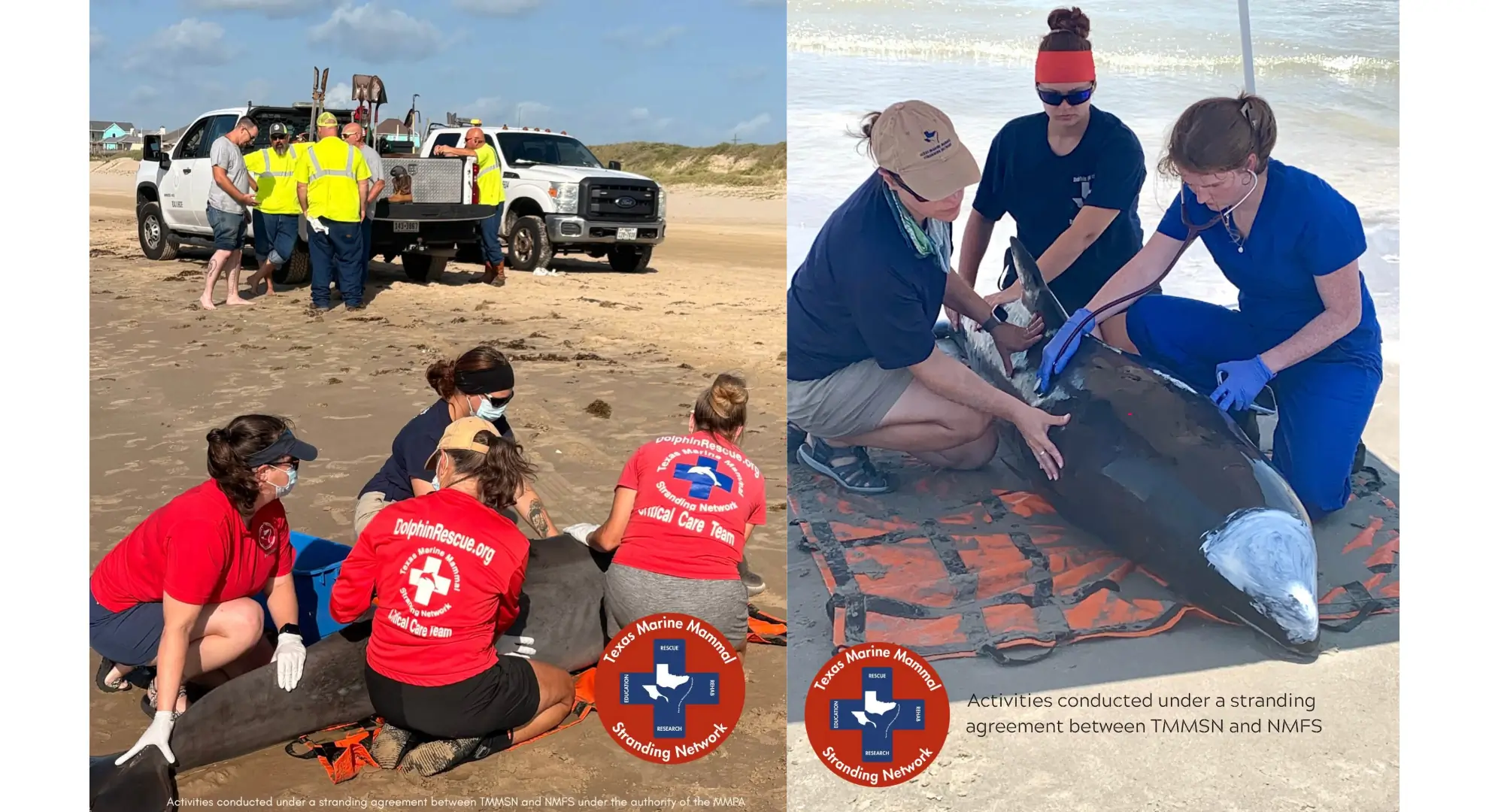
Galveston, TX – The Texas Marine Mammal Stranding Network responded to two separate stranding events across the Texas coast this month, resulting in the deaths of a rare melon-headed whale and a chronically ill bottlenose dolphin.
Rare Deep-Water Whale Strands Between Galveston and Port Aransas
Recommended Videos
Between Aug. 1 and Aug. 2, responders mounted an operation from Galveston to Port Aransas to assist a stranded melon-headed whale (Peponocephala electra). The species is a deep-diving offshore marine mammal that is rarely encountered near shore.
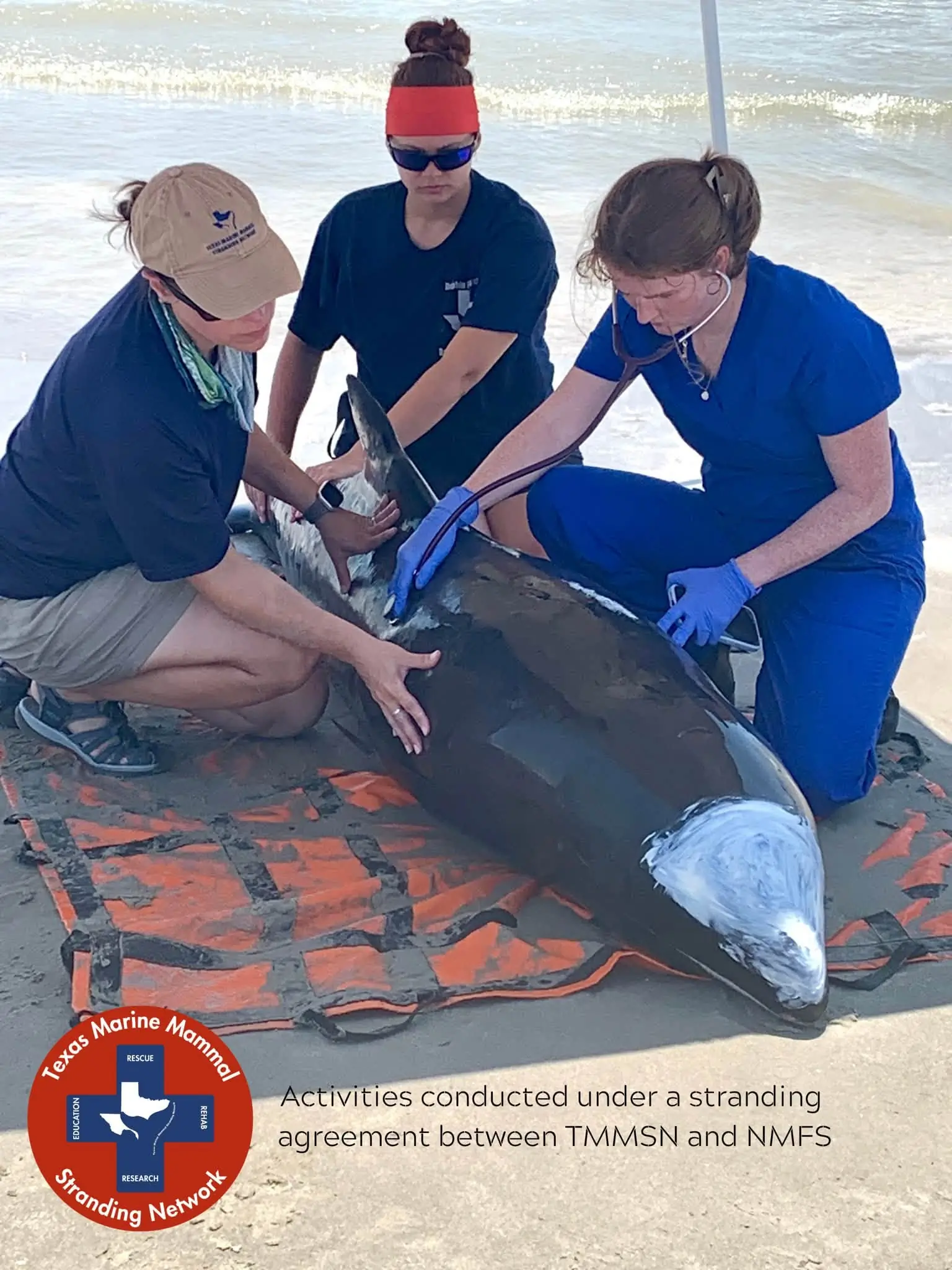
Because there are currently no dedicated whale and dolphin-stranding response organizations based in South Texas, the Galveston-based team traveled south to lead the response.
Before responders arrived, beachgoers repeatedly attempted to push the whale back into open water. Network officials noted that stranded whales and dolphins come ashore due to underlying illness or injury, and returning them to the water can prolong suffering and delay essential care. Upon arrival, crew members found beachgoers providing the animal with shade and space.
Following a clinical assessment and veterinary evaluation, officials made the decision to humanely euthanize the whale. As deep-diving cetaceans, melon-headed whales generally do not tolerate long-term rehabilitation settings.
Responders conducted a necropsy on Aug. 2 and gathered samples for laboratory analysis to determine the underlying cause of the stranding.
All response activities were conducted under a formal stranding agreement between the TMMSN and the National Marine Fisheries Service, authorized under the Marine Mammal Protection Act.
Chronically Ill Dolphin Dies on Bolivar Peninsula
On Aug. 14, early-morning fishermen spotted a live-stranded bottlenose dolphin in the surf at Crystal Beach on the Bolivar Peninsula.
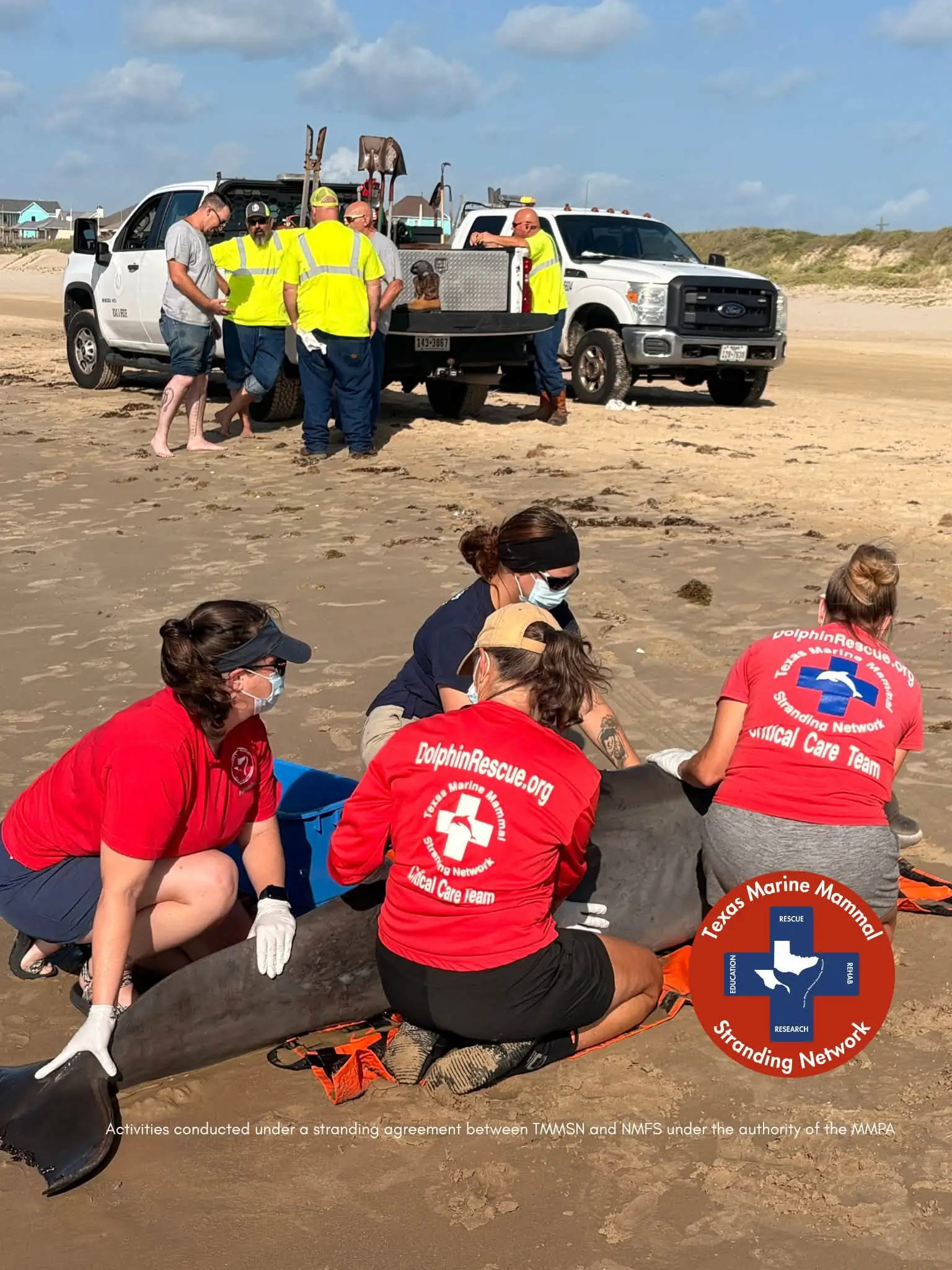
Crews from Galveston County Road & Bridge assisted the animal on the beach while the rescue team crossed the ferry. However, the dolphin died shortly after responders arrived on scene.
Preliminary evaluations showed the dolphin was in poor body condition with signs of chronic illness. Responders transported the carcass to the TMMSN Research Center in Galveston for further post-mortem examination.
Public Guidance for Marine Mammal Strandings
The TMMSN urges beachgoers who encounter a stranded dolphin or whale to follow these safety guidelines:
- Do not return the animal to the water. Pushing a stranded animal back into the sea delays professional intervention and can aggravate severe medical conditions.
- Keep a safe distance. Provide the animal with space and do not crowd or stress it.
- Report the sighting immediately. Call 1-800-9MAMMAL (1-800-962-6625) in Texas to reach trained response personnel.
The Texas Marine Mammal Stranding Network is a 501(c)(3) nonprofit organization. More information on their research and response efforts is available at DolphinRescue.org