
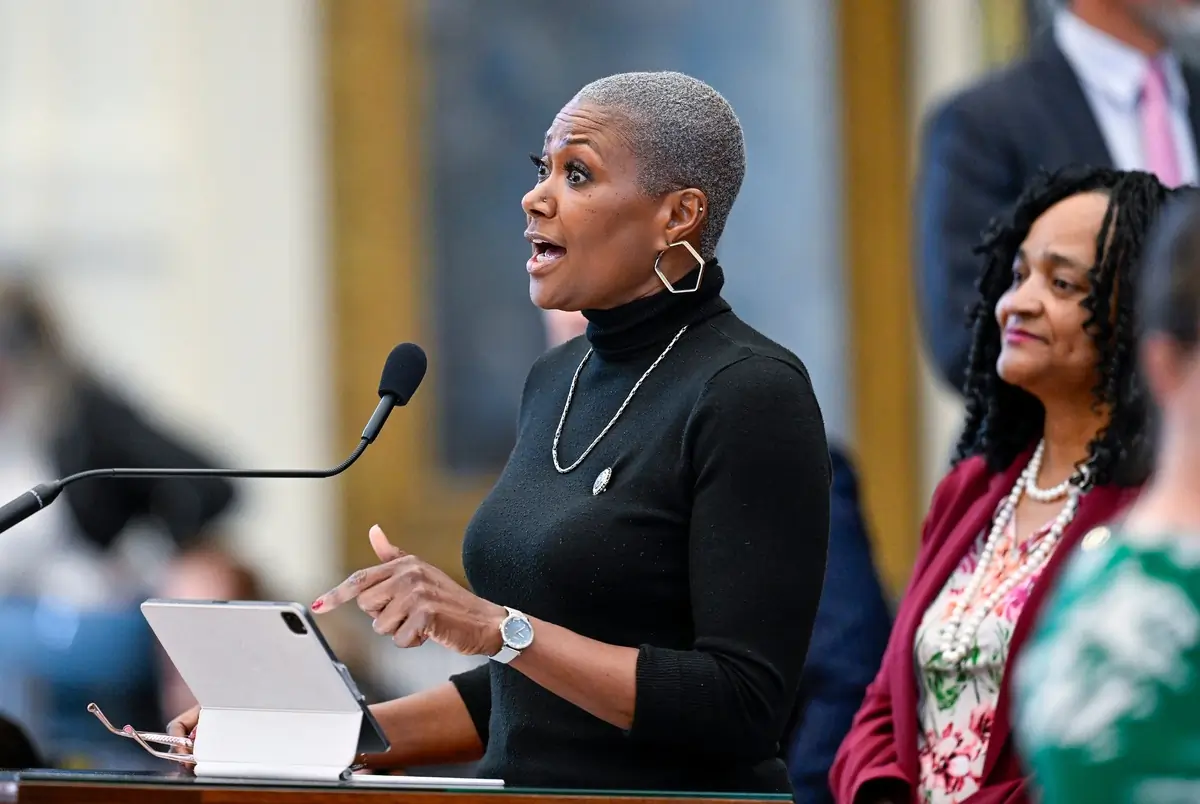
HOUSTON – State Rep. Jolanda Jones is sounding the alarm about the growing influence of artificial intelligence and social media on young people, arguing the technology is weakening students’ critical thinking skills and calling for stricter limits on AI use in education.
During a news briefing focused on public education, artificial intelligence and social media, the Houston Democrat said she believes students are becoming increasingly reliant on AI instead of learning how to think independently.
Recommended Videos
“I’m not a fan of AI at all, especially in public education,” Jones said. “Kids are not using their brains.”
Jones, a former Houston ISD trustee, said the rise of AI has made it easier for students to avoid problem-solving, writing and other foundational skills that she believes are essential to learning.
“The one thing before AI, you literally had to use your own brain to figure things out,” she said. “With the advent of AI, kids don’t have to problem solve. They don’t have to spell check. They don’t have to do anything.”
She said she would require students to handwrite assignments if she were teaching, arguing that writing by hand forces students to think critically and better retain information.
Jones also expressed concerns that AI is affecting higher education and even professional fields such as law, where she practices as an attorney. She pointed to reports of attorneys relying on AI-generated legal citations that turned out to be fabricated.
“I think AI has literally debilitated the human brain,” Jones said.
Jones said she believes children should not be allowed to use AI throughout elementary and middle school and suggested restrictions continue into the first years of high school.
“I don’t know what the magic age is, but it definitely needs to be through elementary, middle school, and probably the first two years of high school,” she said.
She also questioned whether lawmakers are willing to regulate artificial intelligence, saying she believes Texas has not adopted adequate safeguards for students.
“I don’t think there are proper protections for students to be taught to actually use their brains,” Jones said.
Beyond artificial intelligence, Jones said social media is contributing to declining self-esteem among young people by creating unrealistic standards through filters and curated online content.
She said many users compare themselves to edited versions of others’ lives, leading to unhealthy expectations.
“I think social media is really destroying the self-esteem of people,” Jones said.
Jones also raised concerns about people increasingly turning to AI chatbots instead of licensed mental health professionals.
“I know people who literally talk to ChatGPT like it’s a real person,” she said. “These AI tools are programmed to tell you what you want to hear.”
Jones encouraged news organizations, particularly community and ethnic media outlets, to continue educating families about the risks associated with AI and social media.
She said she is also considering hosting a town hall to discuss the future of education and how parents can help children develop critical thinking skills in an increasingly technology-driven world.
“I actually think people need to talk about it,” Jones said. “Write articles about it. If I do a town hall, come to it.”
