
New financial reports reveal that CenterPoint Energy CEO Jason Wells received a 30% raise in the months following Hurricane Beryl.
Lawmakers and electric customers skewered Wells and the utility company for their disastrous response to restoring power after the Category 1 hurricane hit Houston on July 8th, 2024. At least ten people died from heat-related illnesses stemming from prolonged power outages after the storm.
SEE MORE: Houston community members react after KPRC 2’s exclusive interview with CenterPoint CEO
Wells described the power company’s actions as “inexcusable” in a special Senate Committee hearing in Austin after the storm.
“Our response to the impacts of Hurricane Beryl and communications were not acceptable,” said Wells on July 29, 2024. Wells told lawmakers he would not resign because doing so would only delay CenterPoint’s work to improve operations.
Pay Raise Instead of Resignation
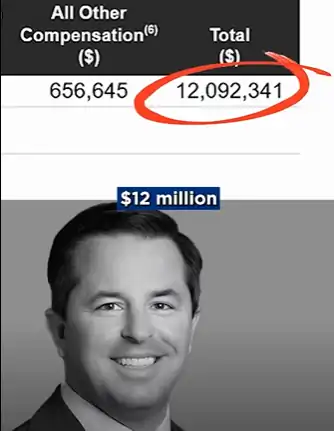
CenterPoint’s annual proxy statement to its shareholders in March 2026 shows that Jason Wells’ compensation increased to more than $12 million in 2025, up from $9.2 million in 2024.
Part of the raise is performance pay, usually awarded to executives who meet important goals or metrics. CenterPoint failed on two keys metrics: Electric customers experiencing multiple interruptions and customer satisfaction.
On page 49 of the 96-page document, it reads, “Performance was below target for our operational excellence composite goal (which represents at 10% of the plan’s metrics) and below threshold for our customer satisfaction goal (which represents the remaining 10% of the plan’s metrics), which moderated overall achievement.”
Despite those failures, Wells still got the pay raise.
“It’s a huge deal, and it’s even more interesting when you consider that at the very top of their latest proxy report, they said the emphasis is on customer affordability, but their profits are increasing and the compensation is increasing,” said Energy and Policy Institute researcher Krysti Shallenberger.
The watchdog organization has tracked executive compensation of investor-owned utilities across the country since 2017.
- They found that since 2017, average utility CEO compensation has risen 47 percent.
- This outpaces inflation, which rose 31 percent from 2017 to 2025, and average wage growth for American workers, which has risen 38 percent in the same span.
- The Energy and Policy Institute found if you live in the Houston area, 14 Cents of every dollar of your electric bill goes straight to CenterPoint Energy profit.
Tyson Slocum is director of Public Citizen’s Energy Program. He said the profit margins investor-owned utilities are seeing are large compared to the net single digit profit margins in most industries.
“We’re not saying they shouldn’t make money, but is a 14.5% profit margin in 2025 reasonable considering how many Texans are struggling to make ends meet?” Slocum asked.
Profit margins of this scale are high relative to most sectors of the U.S. economy. Companies in most industries typically report net profit margins in the single digits, making the margins reported by many electric utilities comparatively large.
The only people who can change the rates CenterPoint Energy charges ratepayers are the Texas Public Utility Commission. We’ve requested an interview. None of the commissioners has accepted.
CenterPoint Energy Response
When we asked CenterPoint Energy why Wells received such a large increase.
CPE spokesperson Augusto Bernal sent the following statement by email: “None of Jason Wells’ compensation and retirement expenses are borne by CenterPoint Energy’s electric customers in Texas. Those are paid by shareholders. CenterPoint Energy continues to have the lowest average price per kilowatt hour among Texas investor owned utilities in other parts of the state.”
MORE: CenterPoint disputes KPRC 2’s investigation into power outage hot spots

