

MONTGOMERY COUNTY, Texas – A Montgomery County mother says she fears political and professional relationships inside the county courthouse could prevent her family from receiving a fair trial in a lawsuit involving Precinct 4 Commissioner Matt Gray.
The lawsuit stems from an October 2024 altercation involving children at Great Wolf Lodge in Webster. Jessica Sisney said her 11-year-old son, who has special needs, became involved in a fight with Gray’s son near the resort’s pool.
Recommended Videos
Security video reviewed by KPRC 2 shows the children fighting as several adults approach. The video does not have audio.
Sisney alleges Gray and the child’s grandmother shouted profanities and encouraged Gray’s son to continue fighting. She also alleges Gray threatened another parent and pushed a security employee who tried to intervene.
“It was so much that it was almost too much to take because it happened so quick,” said Sisney.
What Gray alleges in the lawsuit
Amanda and Matthew Gray filed the lawsuit individually and on behalf of their son in July 2025.
According to the original petition, the Grays allege the Sisney’s son was unsupervised and that lifeguards had been alerted to what the petition describes as disruptive behavior at least twice.
The petition alleges the Sisney’s son struck the Gray’s son in the face, causing a cut below his eye, bruising, permanent scarring and decreased visual acuity.
The Grays accuse the Sisney’s son of inflicting bodily injury and making offensive physical contact. They also accuse Jessica and Richard Sisney of negligent supervision.
They are seeking more than $250,000 for medical expenses, pain and suffering, mental anguish and other damages. They are also seeking exemplary damages against the Sisney’s son, alleging his actions were willful and malicious.
Jessica Sisney subsequently filed a counterclaim individually and on behalf of her son, presenting a sharply different account of the confrontation.
According to the her counterclaim, Sisney alleges Matthew Gray escalated what began as a brief dispute between the children, encouraging his son to continue fighting and interfering with people who tried to stop the confrontation.
The filing alleges surveillance video shows Gray pointing toward the Sisney’s son, directing his son to continue, moving around pool furniture to prevent an adult from intervening and pushing a resort employee.
In bodycam video, you can hear a security guard tell a Webster police officer that there was alcohol involved.
“So he was drunk and took a kid to the hospital?” the officer said on bodycam video.
Sisney said she considers both children victims of adults who should have stopped the confrontation.
“The child on the other side was saying, ‘No, Daddy.’ He didn’t want to fight either,” Sisney said. “So we have two children that are ultimately victims.”
A spokesperson for Commissioner Gray’s office sent the following statement:
“This is an ongoing civil matter between private parties, with a trial date set and a jury yet to be selected.
There are two sides to every story, and the facts will have their day in court. We would hate to view the selective release and presentation of information surrounding pending litigation as an attempt to influence a perspective jury pool before that process has even begun.
Commissioner Gray vehemently disagrees with the allegations and slander being circulated. The claims made in a social media video do not change the facts of the case, and those facts will be presented in court.”
Why the case remained in Montgomery County
Although the incident happened in Harris County, the Grays filed their lawsuit in Montgomery County, where both families lived.
Gray’s attorney, J. Randal Bays, said Montgomery County is legally permissible and more convenient because the defendants lived there when the claims arose.
“This is not some vast conspiracy,” Bays wrote in response to KPRC 2. “It is black letter Texas law.”
Sisney’s counterclaim requested a transfer to Harris County, alleging local prejudice and arguing that the underlying events occurred there. That request was denied.
Sisney believes the Grays gained an advantage by filing first.
“It’s going to be in his court,” Sisney said. “It’s going to be with people that he knows versus being filed in Harris County where it actually happened.”
Questions about court assignments
The case is being heard by Judge Vincenzo “Vince” Santini in Montgomery County’s 457th District Court.
Sisney and her attorney, Michelle Acosta, have questioned whether Judge Santini’s political, financial and professional connections create an appearance of partiality.
In a motion to recuse, Acosta argued Judge Santini and Judge Kristin Bays lobbied for additional courthouse funding from the body that Gray presides on as a commissioner.
The motion also states that Commissioner Gray and Judge Santini appeared in photographs together at political events while the civil case was pending.
Gray is represented by J. Randal Bays, whose wife, Judge Kristin Bays, presides over Montgomery County’s 284th District Court. Texas court rules require a judge to recuse when the judge’s spouse is acting as an attorney in the case.
Bays said civil cases are initially assigned through Montgomery County’s court-assignment system. If one of his cases is assigned to his wife’s court, it is transferred to Judge Santini’s court under a standing administrative order.
Bays said he did not select or request Judge Santini.
A KPRC 2 review of 285 cases in which Bays was listed as an attorney after the creation of the 457th District Court found 88.4% were assigned or transferred to Judge Santini’s court.
The high percentage is largely explained by the standing order requiring Bays’ cases to be moved out of his wife’s courtroom and the county’s practice of having certain courts specialize in civil cases.
Acosta previously asked Judge Santini to step aside, arguing that the relationships among Judge Santini, Bays and Gray created an appearance of impropriety.
Judge Santini referred the recusal motion to the regional administrative judge. An outside judge was assigned to decide the issue and denied the motion, allowing Judge Santini to remain on the case.
In a written response, Judge Santini said judicial conduct rules prohibit him from commenting on the substance of a pending case.
“The Court is committed to providing all lawyers and litigants with a fair trial and welcomes the public to attend the open courtroom,” Judge Santini said to KPRC 2.
Campaign contributions questioned
Acosta also raised concerns about Bays’ campaign contributions to Santini.
Bays said he contributed a combined $2,500 during Santini’s first campaign, $1,000 in August 2020 and $1,500 in February 2021. He contributed another $2,500 during a separate election cycle in July 2023.
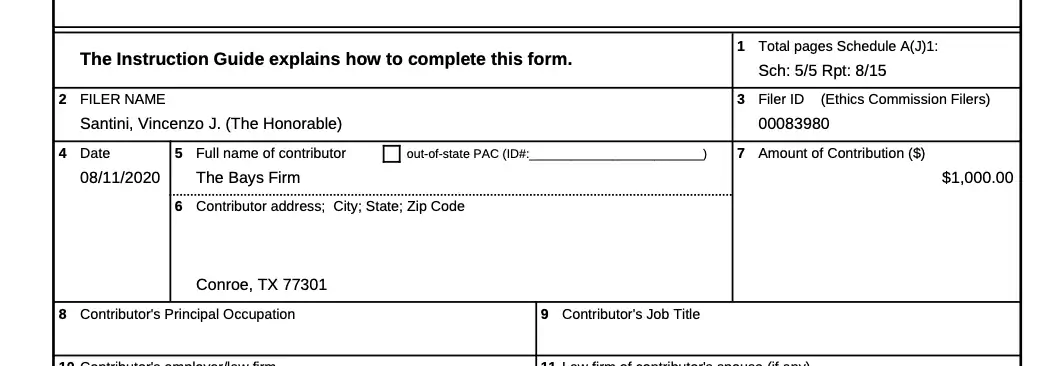
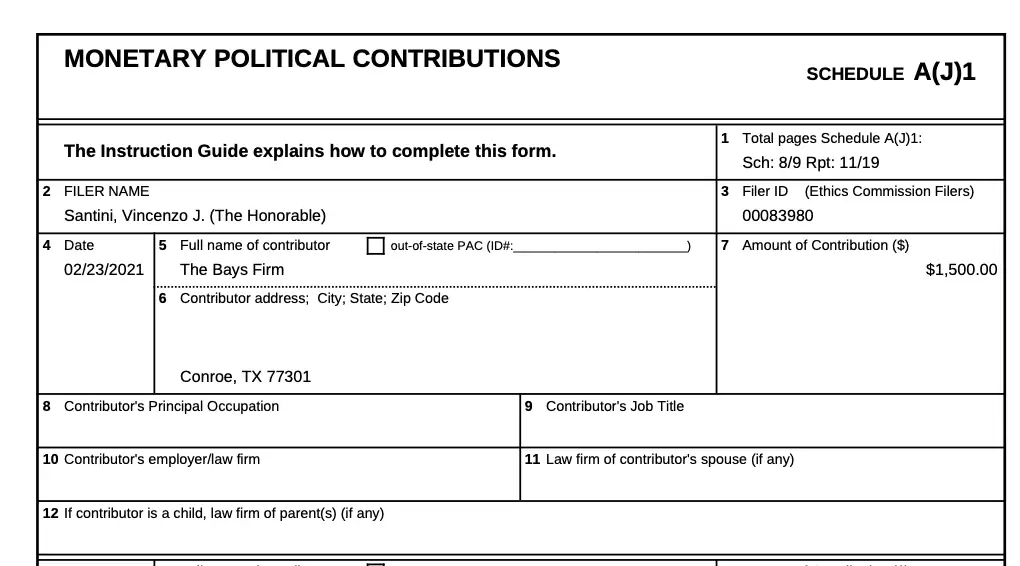
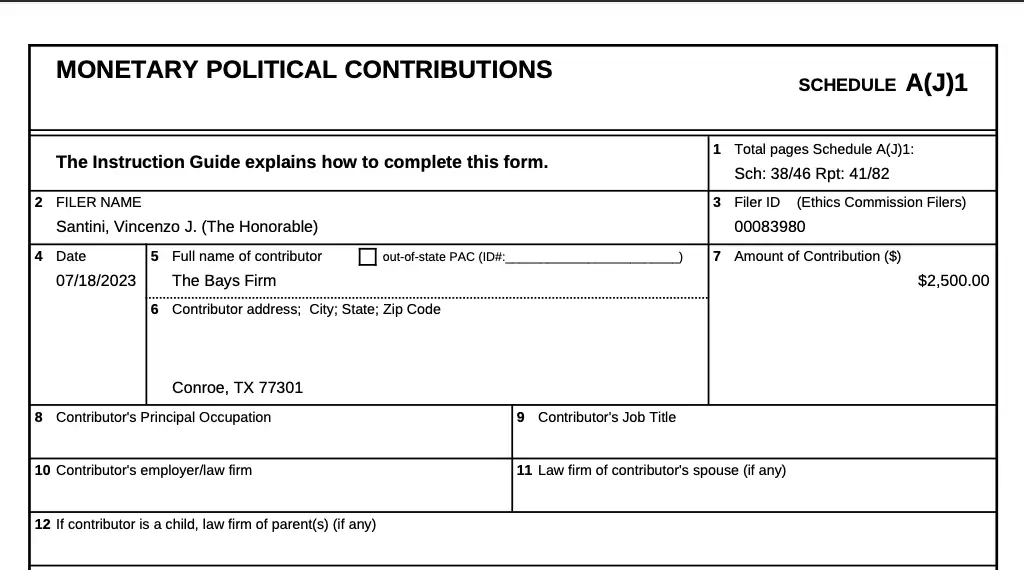
Bays said the donations complied with the $2,500 per-election limit applicable to judicial campaigns in Montgomery County.
Judge Santini also said his campaign never accepted a single contribution above the legal limit and that his campaign-finance reports are publicly available through the Texas Ethics Commission.
Bays rejected the suggestion that the contributions or professional relationships resulted in favorable treatment. He pointed to a hearing attended by another news organization during which Judge Santini ruled against Gray.
Bays accused Dolcefino Consulting, which previously investigated the case, of using “smoke and mirrors” to create an impartiality issue.
“This case will be tried to a jury,” Bays said. “Any concerns about the judge’s evidentiary rulings can be appealed to the Court of Appeals.”
Sisney said Dolcefino was not hired by their family to do a story on the case.
“We have not paid him one dime. Not one. Not from family members. Not from Michelle, our attorney,” said Sisney.
Bays declined an on-camera interview ahead of trial, citing a disciplinary rule that limits lawyers from making public statements that could substantially prejudice an ongoing case. He said he would consider an interview after the trial.
Mother questions evidence rulings
Sisney’s concerns also involve evidence that she says jurors may not be allowed to see.
She said her attorney was denied access to records she believes could establish whether Gray purchased alcohol at the resort.
She also said some video footage has been excluded and that Great Wolf Lodge was dismissed from the lawsuit.
“How can we have a fair trial if they’re not able to see every angle, every side?” Sisney said.
The exclusion of evidence does not, by itself, establish judicial bias. Trial judges routinely decide whether evidence is relevant and admissible, and disputed rulings can potentially be reviewed on appeal.
Sisney maintains that the case is no longer solely about her family’s legal dispute. She believes the public should examine how courthouse relationships and case-assignment rules affect people who appear before elected judges.
“We should be stopping children from fighting, not egging them on,” Sisney said. “It started off advocating just for my son. It’s kind of turned into, why am I going to stop? This is not OK.”
Santini said a pretrial hearing is scheduled for 9 a.m. Wednesday, Sept. 9.
The trial is set for September 14.
